
Morning is always a calm moment for Sinta. She begins her day by sitting quietly on the cage floor, observing the animal keepers as they carry out their cleaning routines. Occasionally, her hand moves to scratch her body, while her gaze remains focused on Sabine, her infant, who stays not far from her. This behavior reflects the natural instincts of a mother orangutan—alert yet composed—constantly monitoring her surroundings while ensuring her offspring remains safe.
Whereas in earlier stages Sabine was almost always clinging to Sinta’s back as an expression of protection and dependency, a noticeable change can now be observed. Sinta has begun to give Sabine more space to move freely. She no longer carries her continuously, instead allowing Sabine to explore the enclosure independently. This shift represents an important stage in an orangutan infant’s development, during which the mother gradually encourages independence by allowing direct learning from the surrounding environment.
Sinta herself now spends much of her time on the cage floor, sitting or resting while maintaining watch from a distance. Sabine, on the other hand, appears increasingly active and confident. She hangs from the cage structures, climbs, and plays with a drum provided as part of daily enrichment. These activities play a crucial role in strengthening muscles, improving balance and coordination, and stimulating curiosity and exploratory behavior—essential skills for young orangutans undergoing rehabilitation.
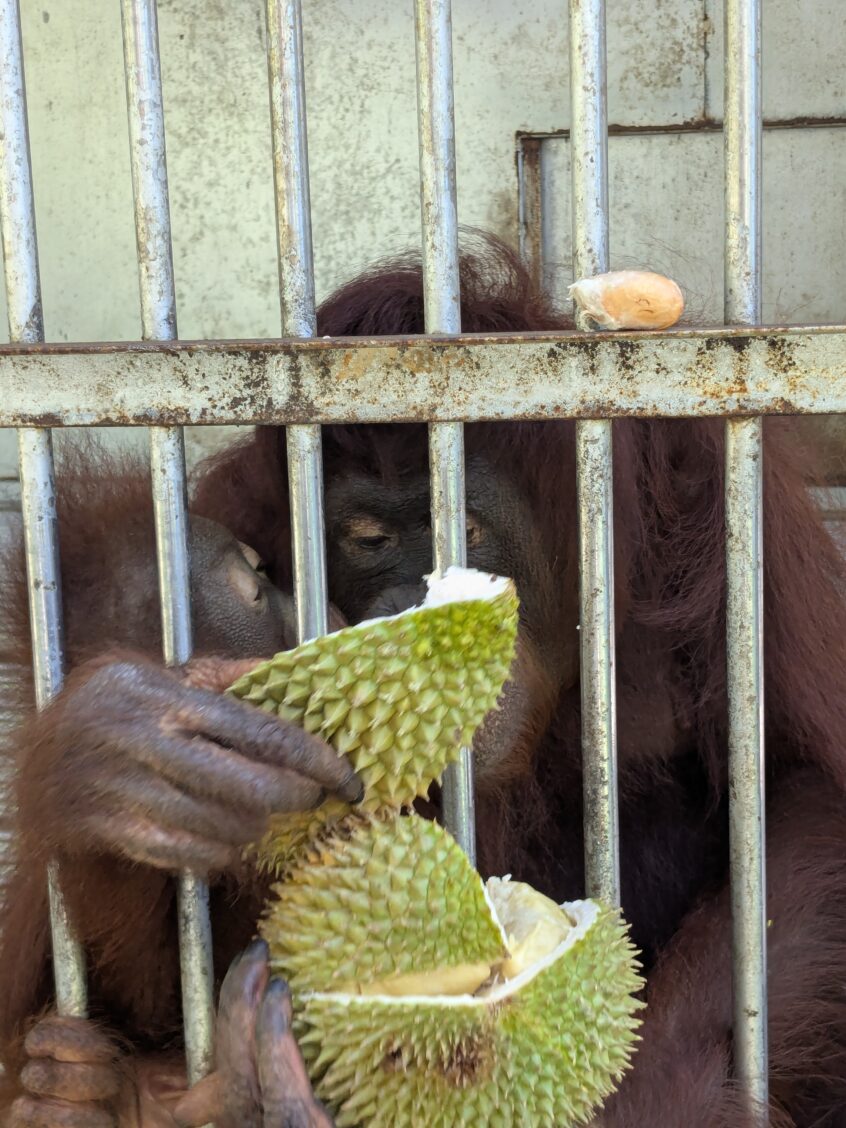
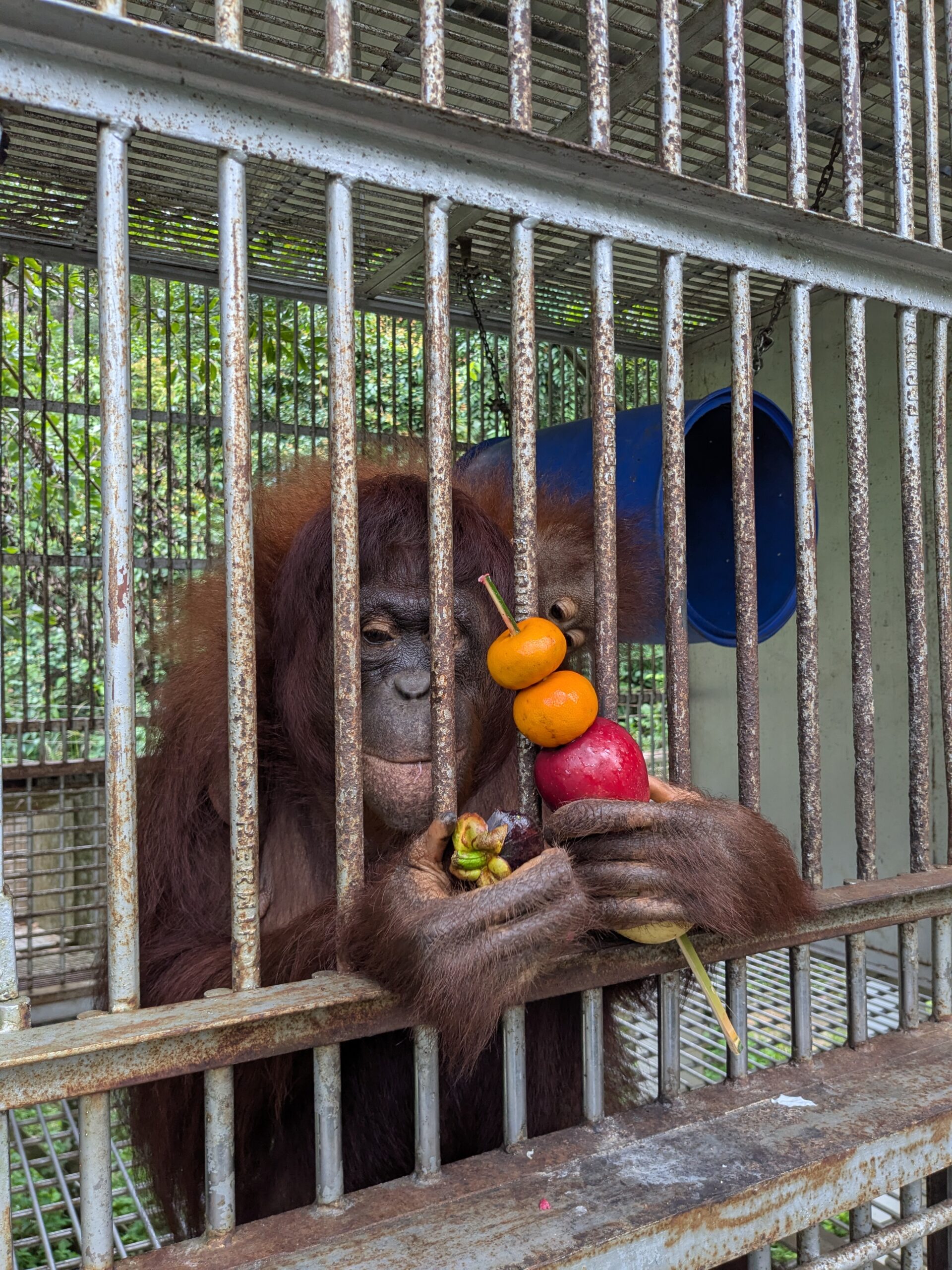
The dynamics of the mother–infant relationship are also clearly visible during feeding times. Although Sabine has begun to hold and enjoy her food independently, Sinta has been observed on several occasions taking food from Sabine’s hands. This behavior is not merely an expression of dominance, but rather part of natural mother–infant interaction. In the wild, mother orangutans often regulate their offspring’s access to food—whether to ensure food quality, manage feeding patterns, or as part of early social learning and hierarchy formation.
Daily interactions between Sinta and Sabine provide valuable insight for the team in understanding the behavioral development of both individuals. Small changes—such as increasing physical distance, Sabine’s growing confidence in playing and feeding independently, and Sinta’s responses in different situations—serve as indicators that natural learning processes are progressing well.
Through consistent observation and support, the Sintang Orangutan Center (SOC) hopes that Sabine will continue to grow and develop according to her natural stages, acquiring essential life skills and gradually progressing toward independence. At the same time, Sinta’s role as a mother remains the foundation of this process, teaching—through her own instincts—how to survive, adapt, and grow along the rehabilitation pathway toward a life closer to the wild.