30-04-2026
|
MAMAT
Lately, Sintang has settled into a distinctive weather rhythm. The days are hot and intense, gradually shifting in the afternoon as clouds gather, the sky darkens, and rain falls toward the evening. This pattern, perhaps unnoticed, influences the lives of the animals within it—including Mamat.
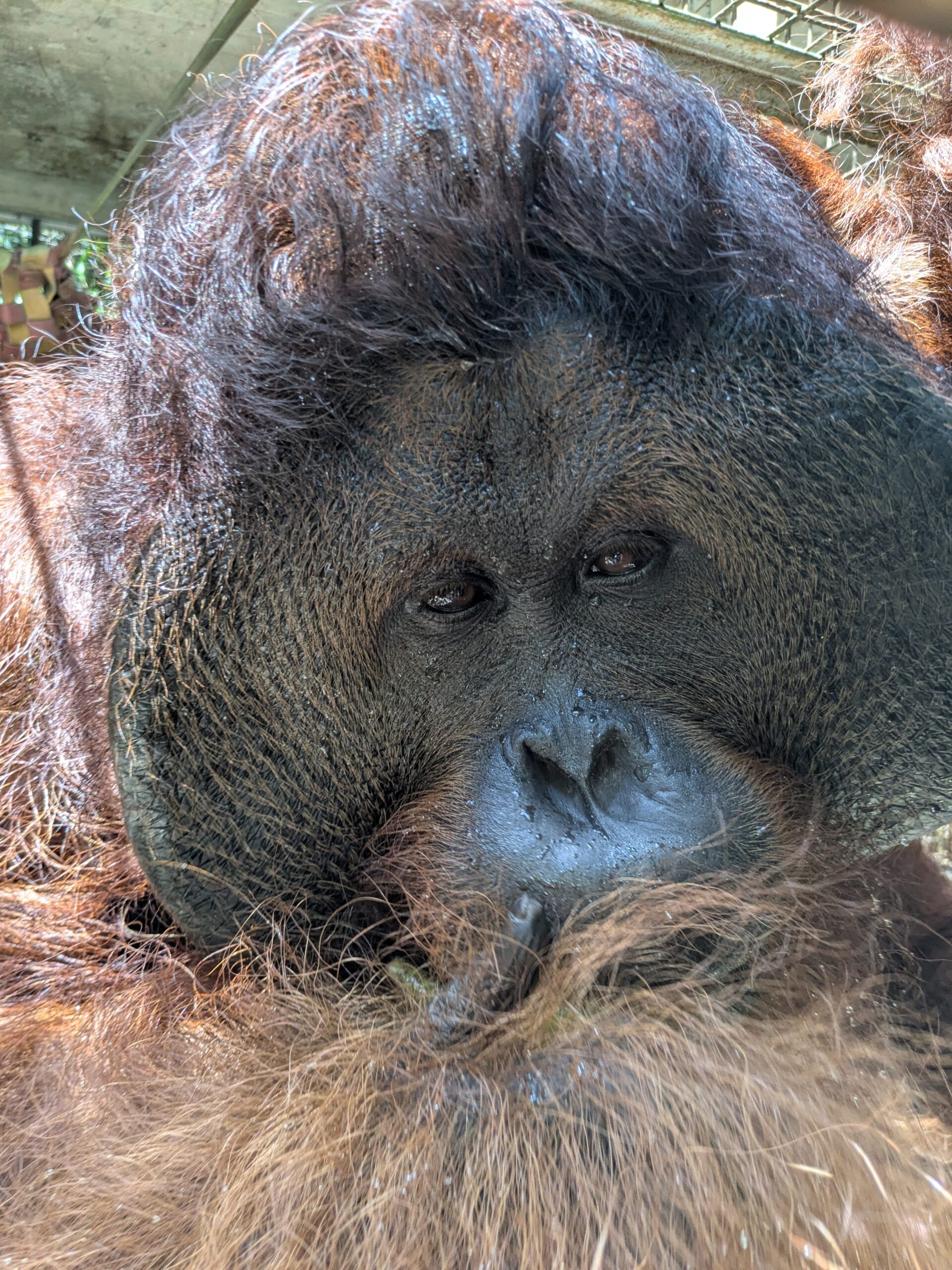
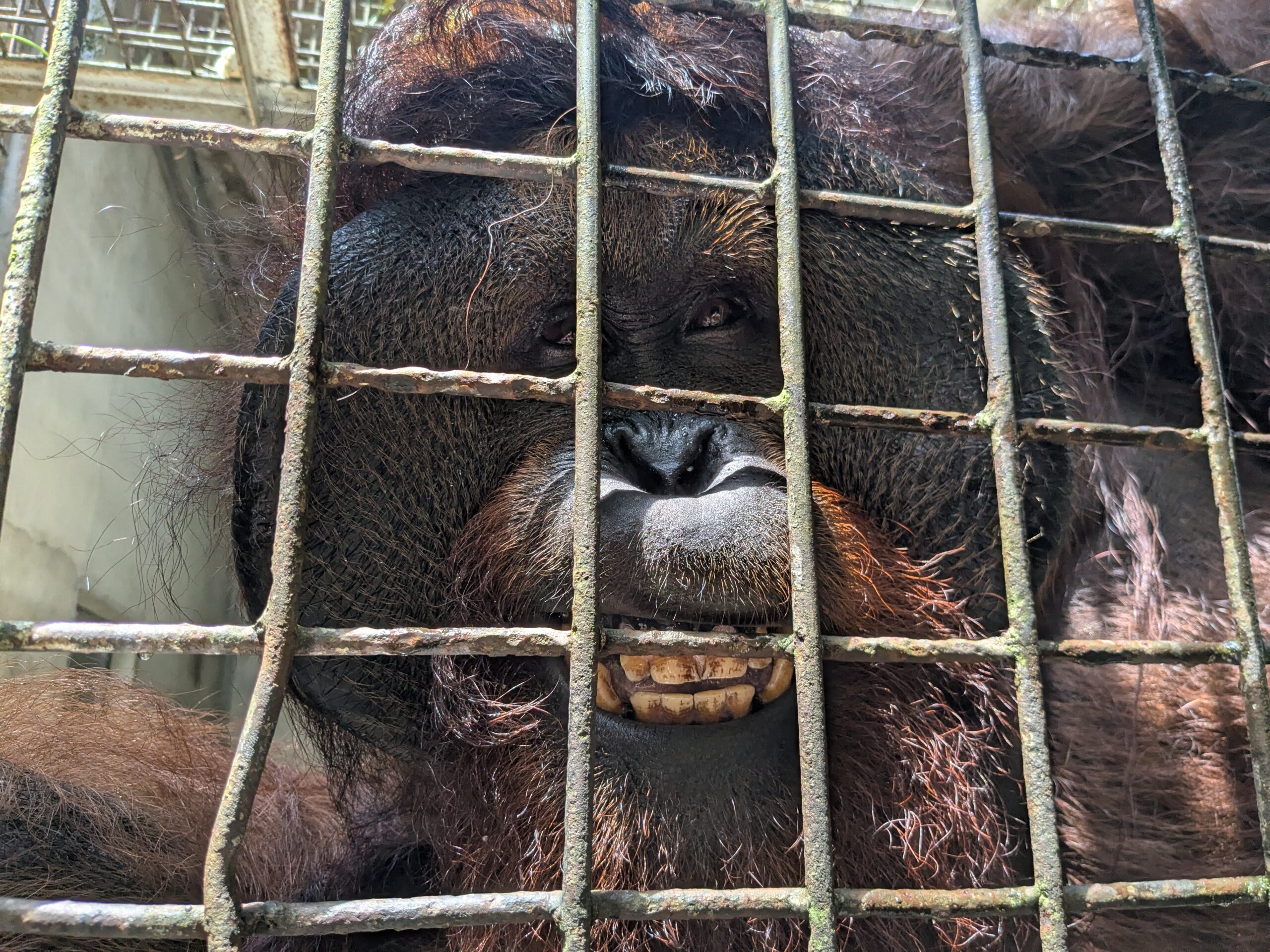
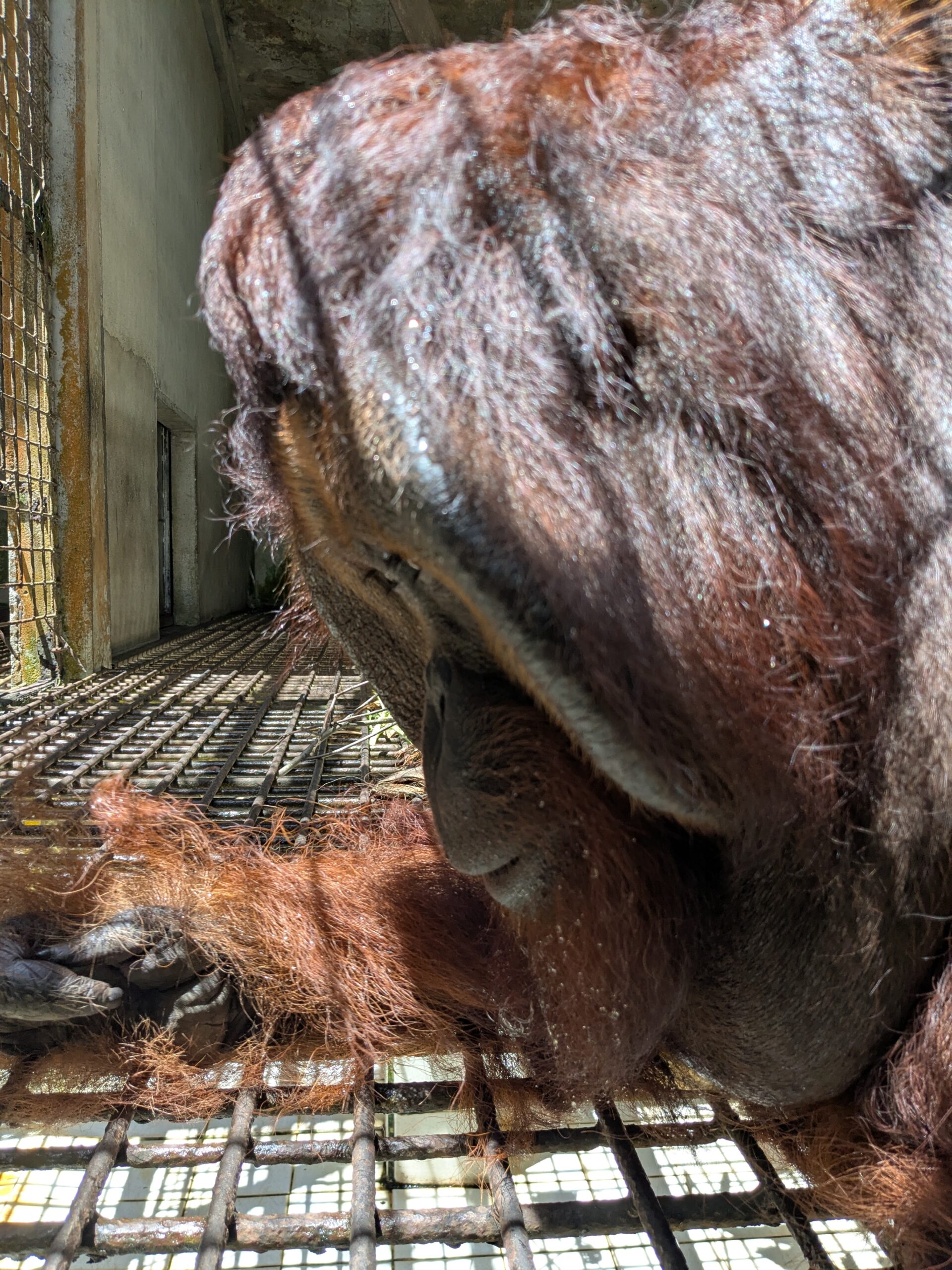
In the morning, while the air is still cool, Mamat is already awake. He doesn’t become active right away. His large body remains mostly still, but his eyes are alert, observing every corner of his cage. There is a unique habit that always stands out: whenever someone passes by, Mamat seems to “greet” them—not with sound, but with a hopeful gaze.
Perhaps it’s hunger. Feeding time is usually around 7:30 AM, and at times like these, Mamat is ready well in advance. There’s something endearing about this habit, as if he hopes that anyone passing by might bring his food earlier than scheduled.
And when it comes to eating, Mamat never does things halfway. With his health stable and no special medical treatment needed at the moment, his appetite is excellent. Every meal provided—whether fruits or vegetables—is always finished without a trace.
Recently, there was an interesting addition to his menu. A Ficus tree near his enclosure was pruned by the animal keepers. Based on the medical team’s recommendation, the fruit from the tree was given to Mamat. The result was easy to predict—he welcomed it enthusiastically and devoured it completely.
His days are also colored by interactions with his neighbor, Beno. From Mamat’s side, his curiosity is clearly evident. He often tries to “invite” Beno to interact. However, Beno tends to show the opposite response—remaining indifferent and not particularly interested. This simple dynamic highlights the difference in their personalities.
Even so, Beno is not the only one who captures Mamat’s attention. Around the quarantine area, many trees are entering their fruiting season. This has attracted “visitors” from the surrounding forest, including red langurs that frequently come to forage.
Their movements high in the trees immediately draw Mamat’s attention. This is where his curiosity truly shines. At the slightest movement outside his enclosure, Mamat becomes fully attentive—sitting still, yet completely focused, as if watching a never-ending show of nature.
Then, when the rain falls during the day, everything seems to slow down.
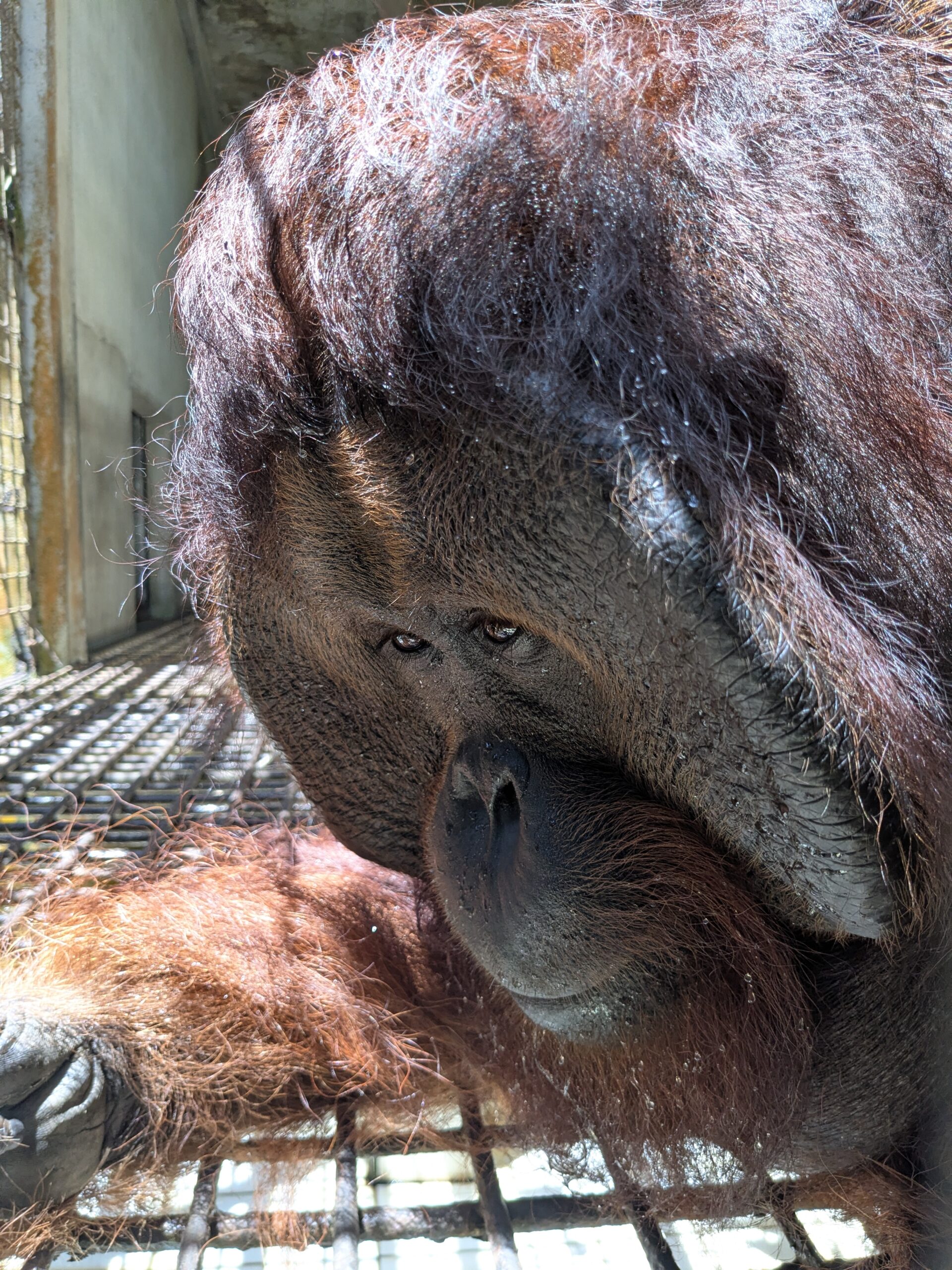
Mamat usually chooses to stay in his hammock. His body relaxes, while his eyes remain open, gazing outward. There is little movement, no drastic change in behavior—just a steady calmness, as if he simply accepts the rhythm of the day as it is.
There is nothing concerning his condition. His health continues to be monitored by the medical team, and so far, everything remains in good condition.
Day by day, Mamat goes through what may seem like a simple routine—observing, eating, and responding to the world around him in his own way. Yet from all of this, one thing stands out most: Mamat remains himself—strong, curious, and always connected to whatever moves around him.
Mamat
Mamat
Mamat