
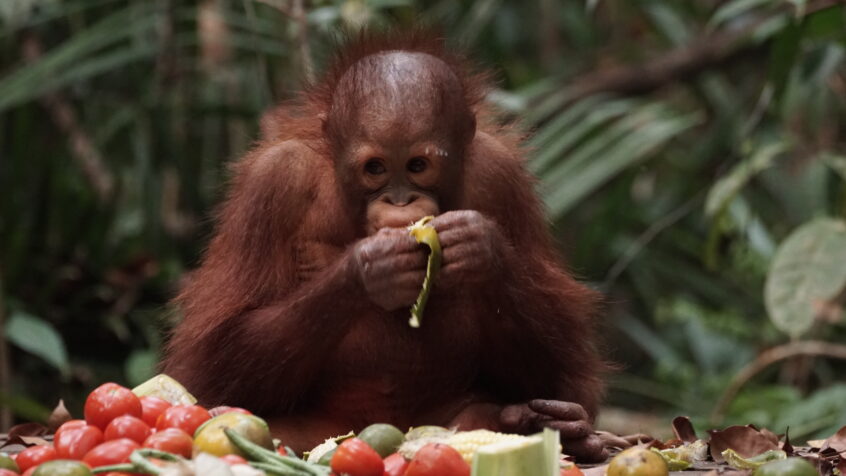
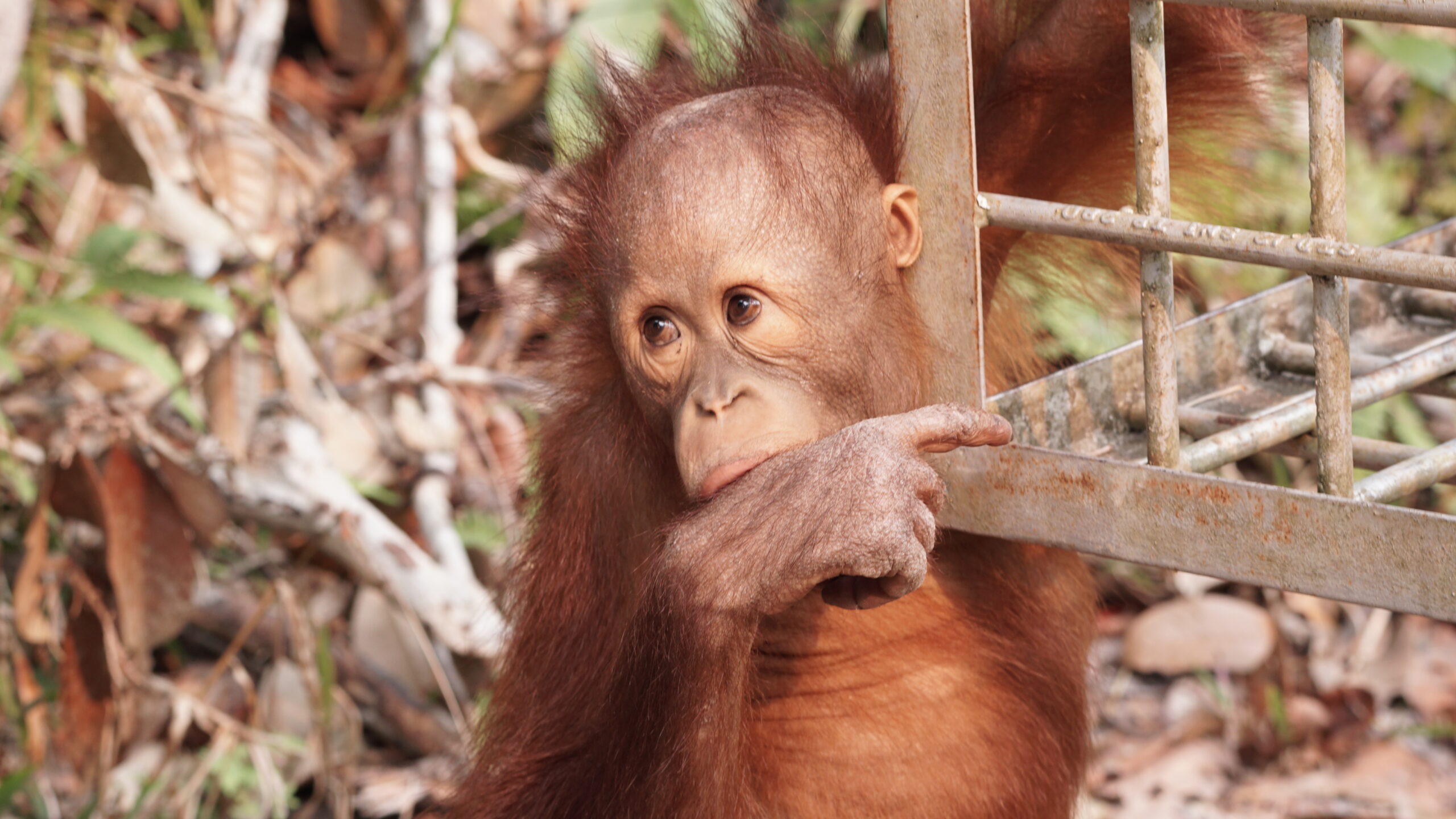
Good news came for Bodat and her group toward the end of August. After being postponed for some time due to weather conditions and the team’s focus on a series of release activities, the SOC behavior and keeper teams once again conducted an overnight forest stay trial for Bodat, Rosi, Annette, and Piet on August 28, 2026. The trial coincided with their second Forest School session of the month.
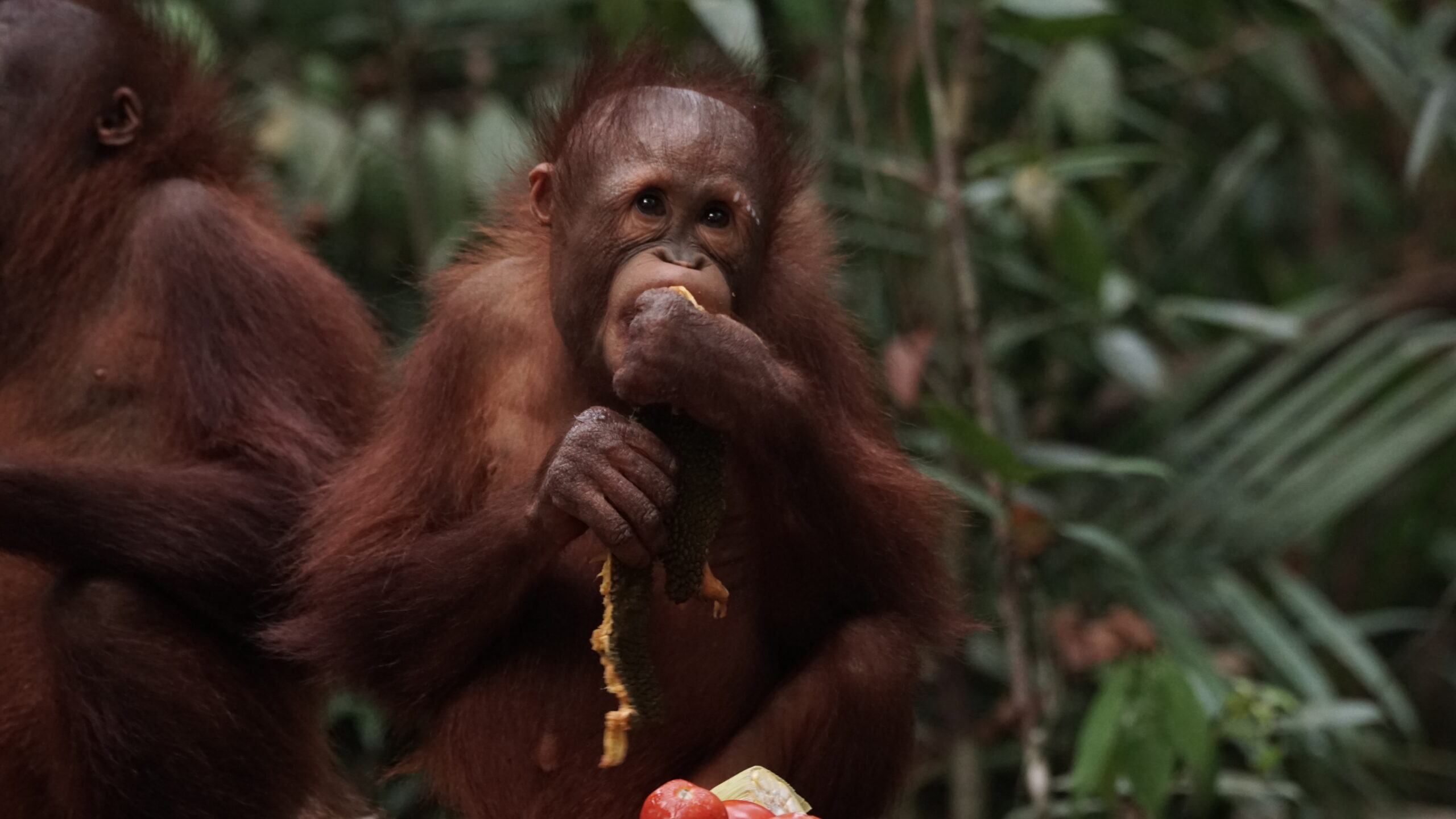
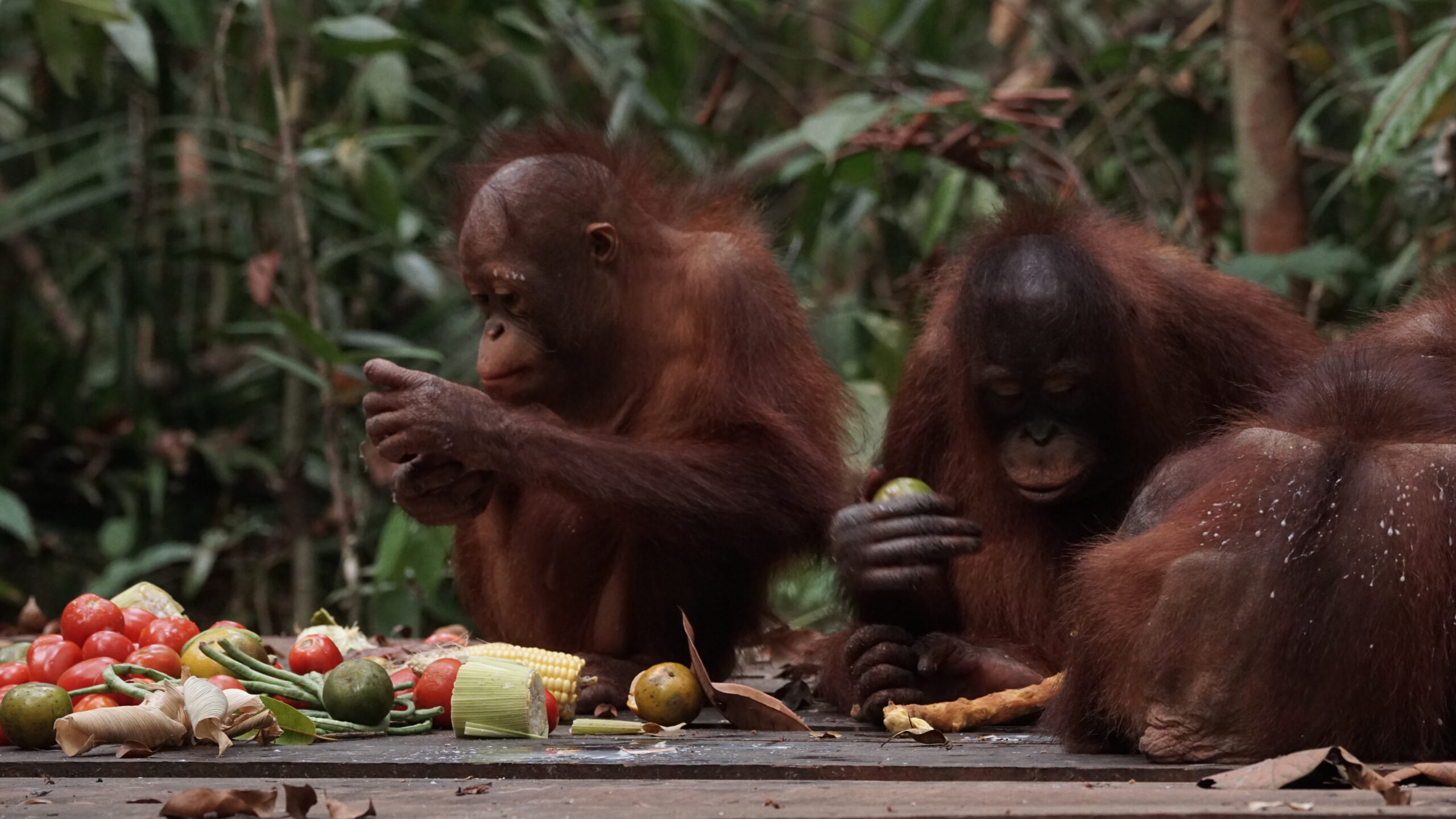
As on previous days, Bodat, Rosi, Annette, and Piet were already waiting at the edge of the Forest School area as their afternoon feeding time approached, anticipating the opening of the tunnel that would lead them back to their overnight cage. That afternoon, however, they were given the opportunity to continue their activities until the evening in the forest. The team brought milk and food to a feeding platform located in the middle of the Forest School area, allowing all four orangutans to feed before beginning their evening activities.
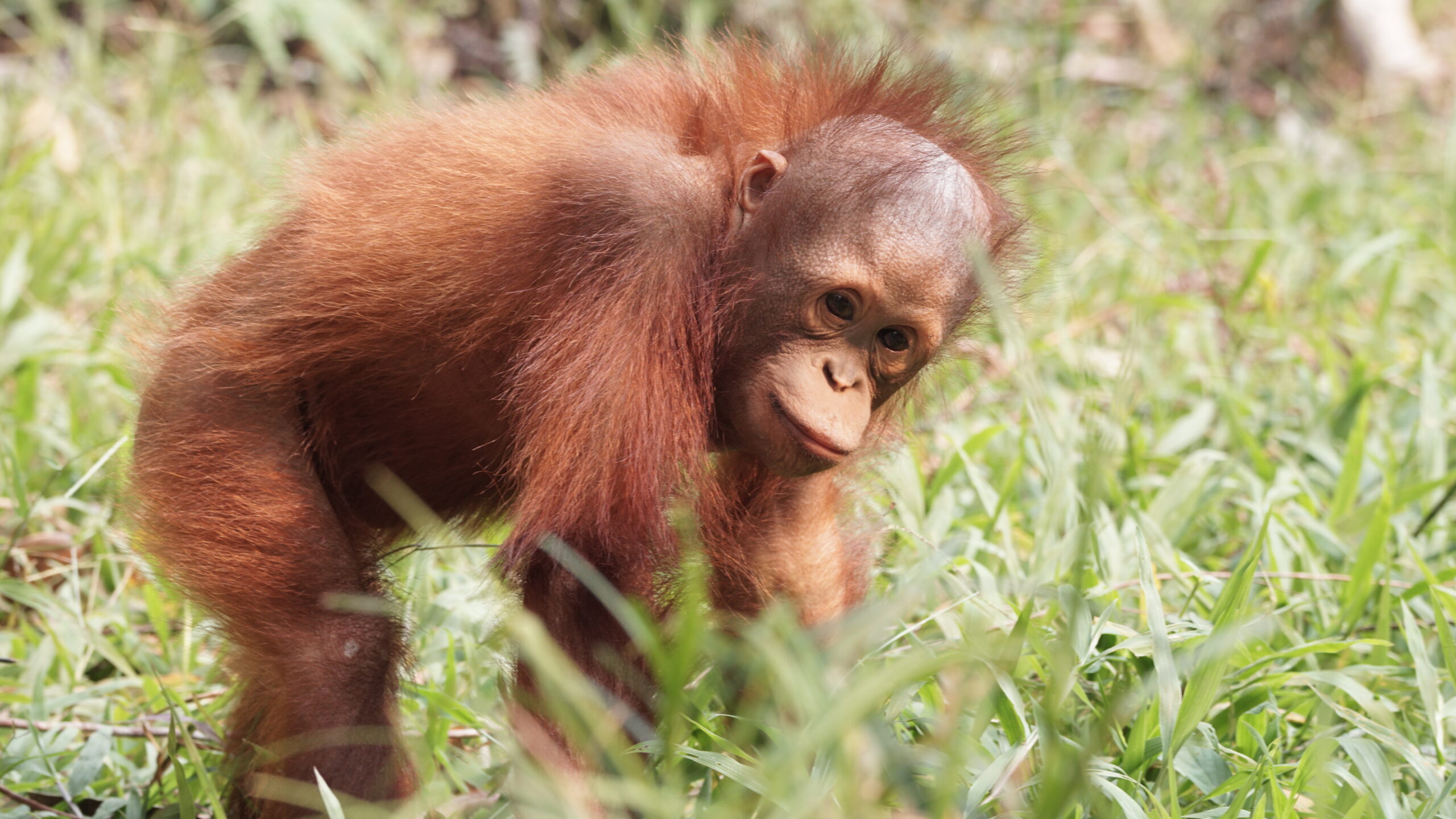
After feeding, Bodat and the other three members of her group remained close to the feeding platform. At exactly 5:00 p.m., the team began monitoring the overnight stay trial. As darkness gradually set in, the four orangutans slowly became less active. Bodat and her group moved only among the surrounding trees before eventually choosing comfortable spots to rest.
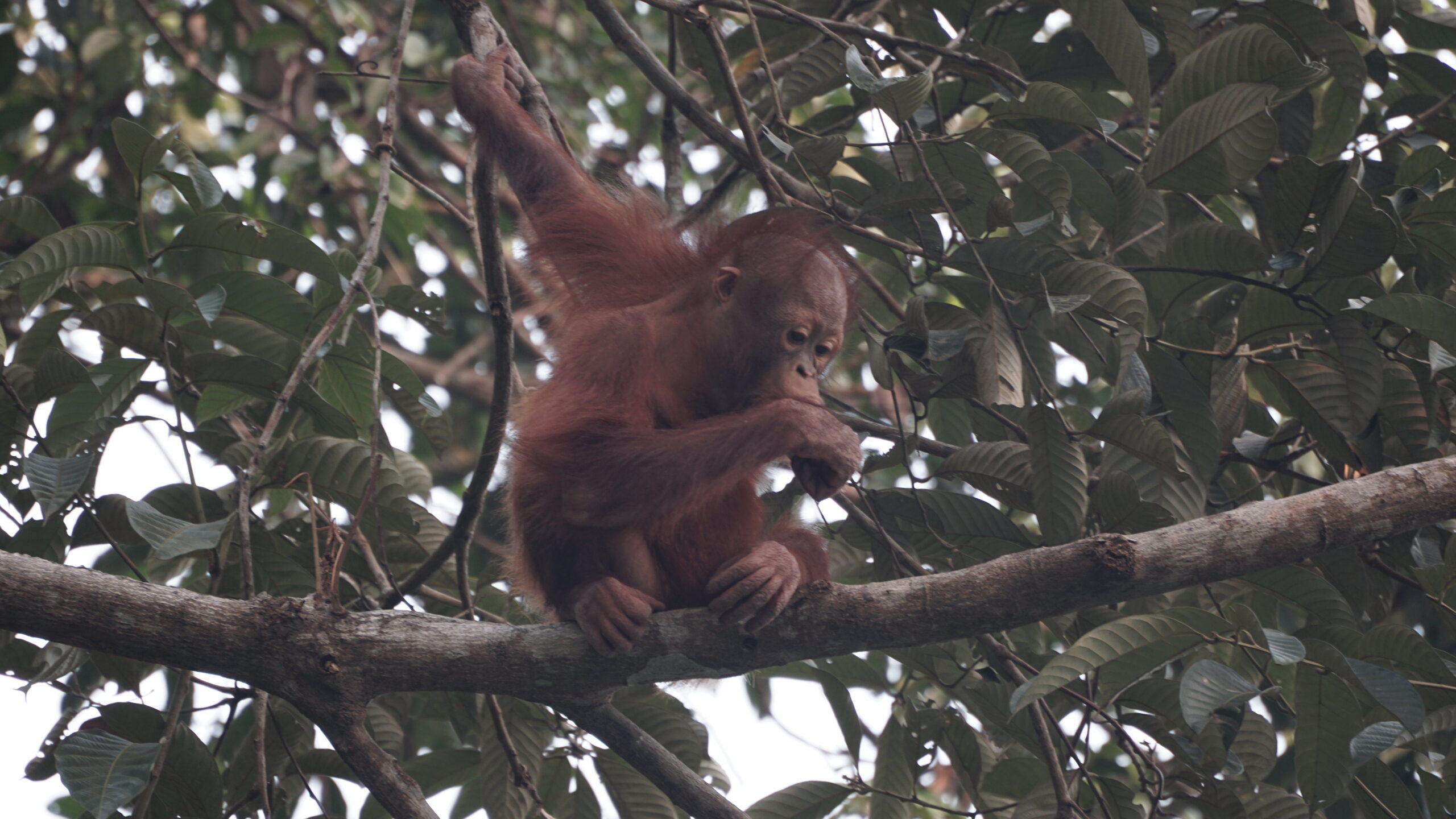
That night, Bodat selected a relatively high tree branch close to Rosi, Annette, and Piet. All four remained in the trees into the night and did not return to their overnight cage. Although they did not build nests, the second-stage trial was still considered successful. For Bodat, spending the night in a forest environment provided a new opportunity to adapt to the sights and sounds of the forest after dark. For the team, the observation provided valuable information for determining the next steps in her rehabilitation. This trial lasted for one night.
The following day, Bodat and her group resumed their activities in the Forest School until the afternoon before returning to their overnight cage. This routine allows Bodat to continue gaining experience in a more natural environment while maintaining a range of natural skills and behaviors alongside her group.
There was also an interesting change in the daily activities of Bodat and her group in the overnight cage. The SOC team and volunteers added several large fire hoses, which were suspended and stretched across the cage from one corner to another. The new structure brought greater variety to their activities. Bodat and the other members of her group appeared more active, swinging, hanging, and even hanging upside down from the hoses.
These fire hoses serve as structural enrichment, adding elements to the enclosure that encourage orangutans to move and explore. Their horizontal and suspended arrangement provides movement pathways that differ from the cage floor while also resembling some of the vertical and horizontal structures orangutans naturally use when moving through trees. With this added structural variety, Bodat and her group have more opportunities to use their bodies in different positions and ways throughout their daily activities.
For Bodat, the experiences she had throughout the month demonstrate how even small changes in her environment can become an important part of her rehabilitation. The opportunity to spend a night in the forest, explore the trees, and interact with new structures in the overnight cage gives Bodat and her group more space to move, adapt, and express their natural behaviors. Through consistent monitoring and management tailored to their needs, the SOC team continues to ensure that each stage of Bodat’s rehabilitation progresses gradually and safely while providing meaningful experiences along the way.
Bodat
Bodat
Bodat
Bodat
Bodat