31-10-2026
|
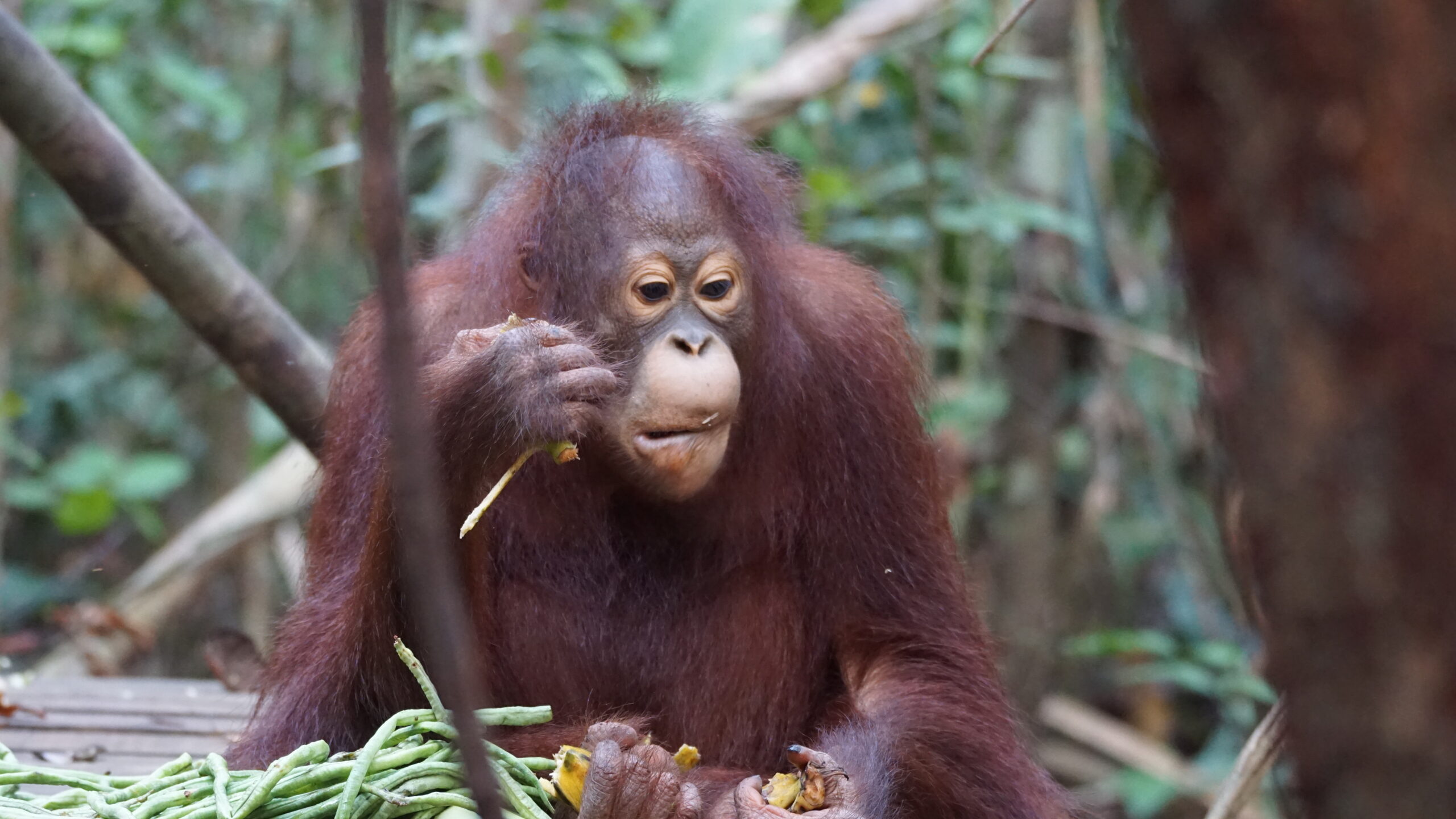
Banir remained in good health throughout October. Her appetite was as strong as usual, and daily monitoring revealed no concerning signs. She also responded well to routine deworming, taking the medication without any resistance. These observations form part of the team’s ongoing health monitoring to ensure she remains in good condition throughout her rehabilitation.
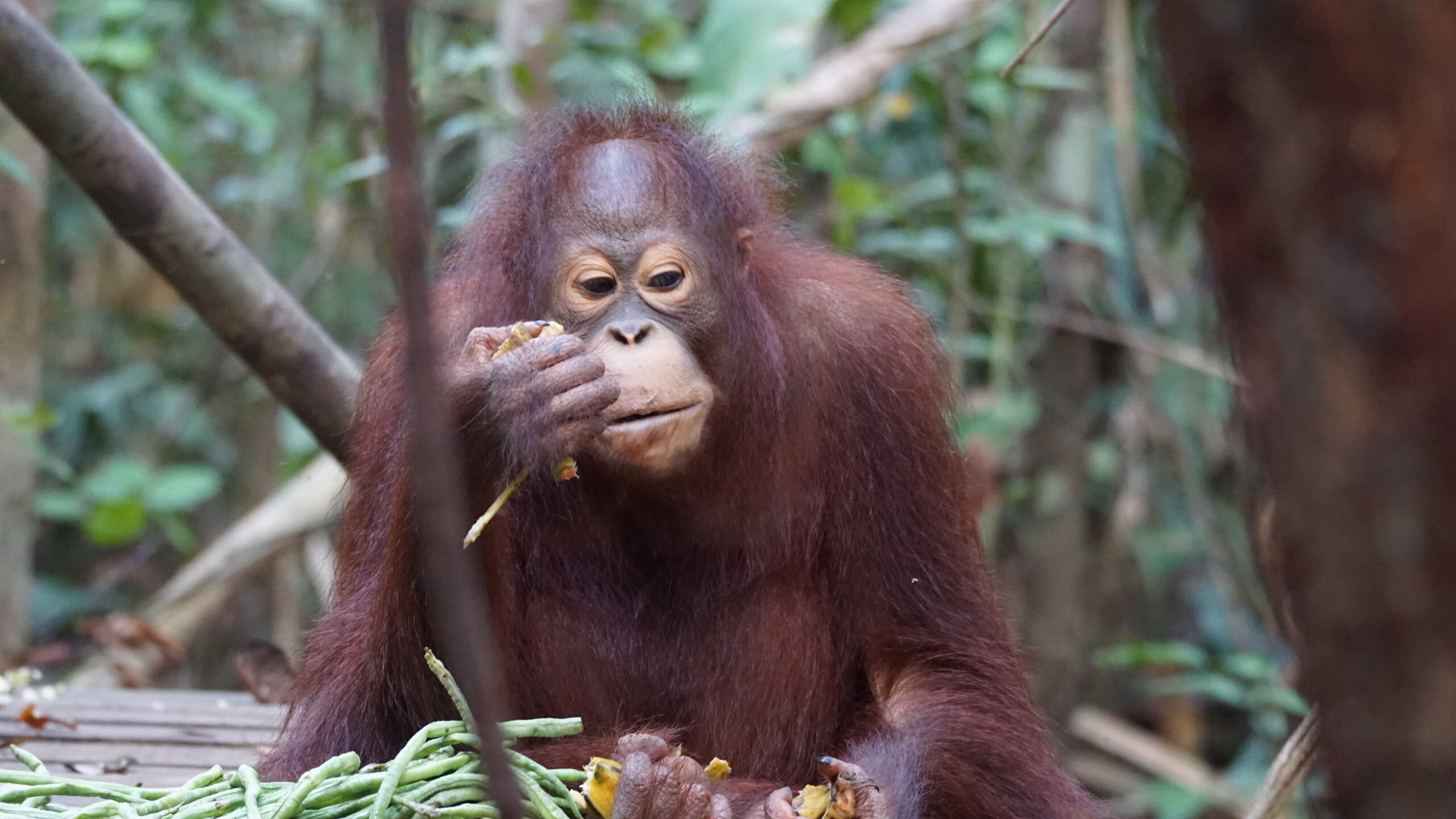
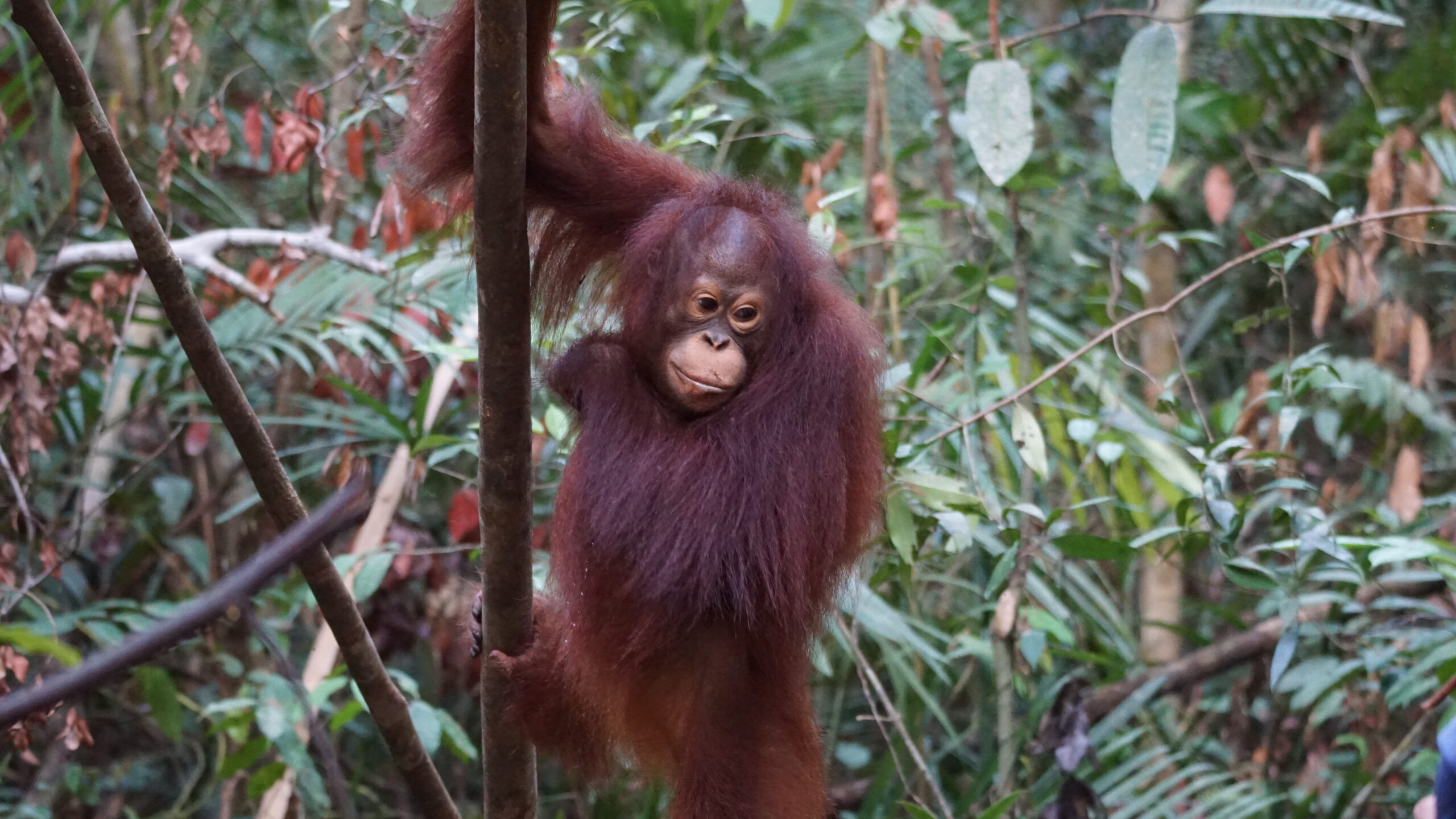
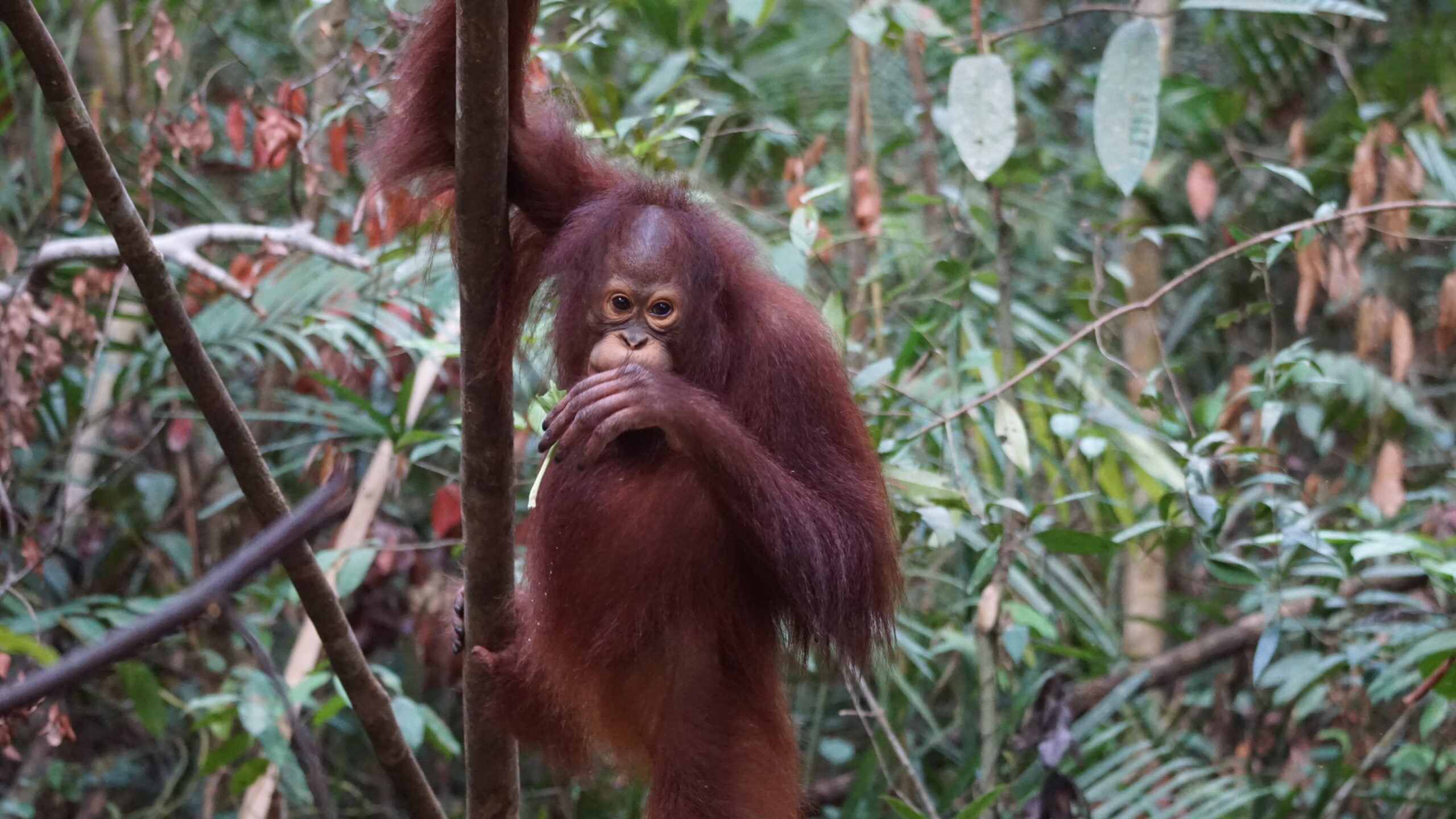
As the weather improved and temperatures became less intense than in previous months, Banir began enjoying more time in the tunnel connected to her overnight enclosure. When she is not attending Forest School, the tunnel gives her an opportunity to observe more of her surroundings. Occasionally, she stretches her long arms down toward the grass growing below the tunnel and pulls some up to eat while relaxing. Even during these quieter moments, Banir continues to explore her environment and make use of accessible food sources.
At Forest School, Banir stood out among the five orangutans in her group for frequently finding and eating termite nests. She was observed discovering them both in trees and on the forest floor. Her frequent discovery of these natural food sources is an interesting aspect of her foraging behavior observed during forest sessions.
An especially memorable moment occurred during the group’s second Forest School session in October, when Banir discovered a nest of stingless bees, known locally as kelulut. These bees are found in various parts of Indonesia, including Kalimantan. Banir initially enjoyed the honey in peace. As she ate, the thick, sticky honey stretched between her mouth and the nest, almost like melted mozzarella. However, Redi soon noticed the discovery and took over the nest. He continued eating while displaying defensive behavior toward the other orangutans approaching, limiting their access to the honey.
To give the other members of the group an opportunity to access the food, the observer intervened by breaking the relatively large honey nest into several pieces. This allowed Banir, Seko, Otan, and Julia to try the honey as well. The opportunity gave them a chance to explore a food source encountered in the forest and formed part of their broader experience of discovering and using natural foods. During orangutan rehabilitation, opportunities to find, explore, and learn how to obtain food in a forest environment are important for developing the foraging skills needed for independent living. However, this single experience does not establish that the orangutans can independently locate and obtain stingless bee honey in the wild.
From reaching for grass around the tunnel to finding termite nests and stingless bee honey at Forest School, Banir has shown an interesting level of engagement with the food sources around her. This month’s discovery of stingless bee honey was also a valuable moment for the rest of her group, as the other orangutans had an opportunity to try it. Experiences like these add to their exposure to natural food sources while giving the SOC Team opportunities to observe how each orangutan responds to and makes use of the resources available in the forest.