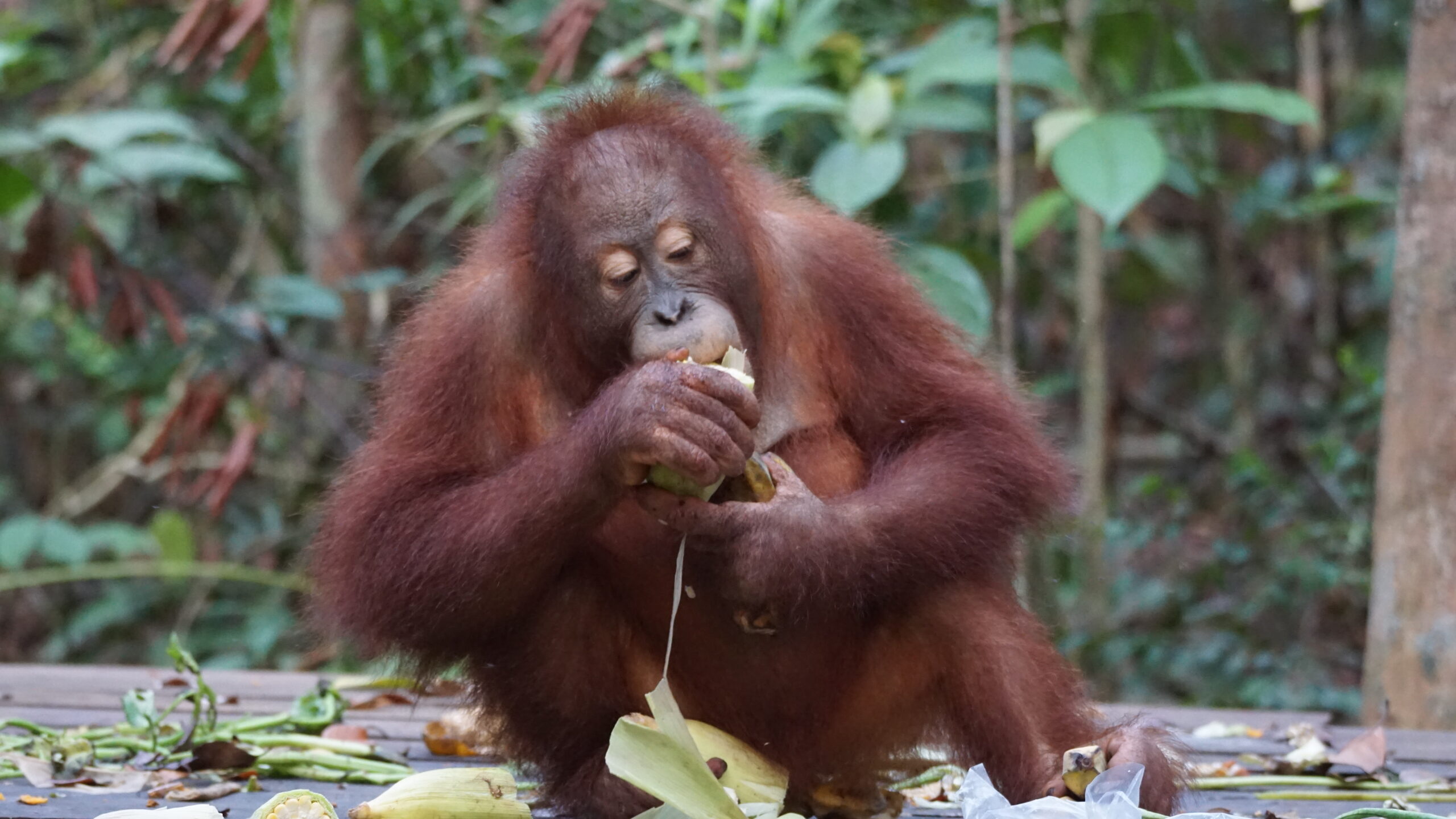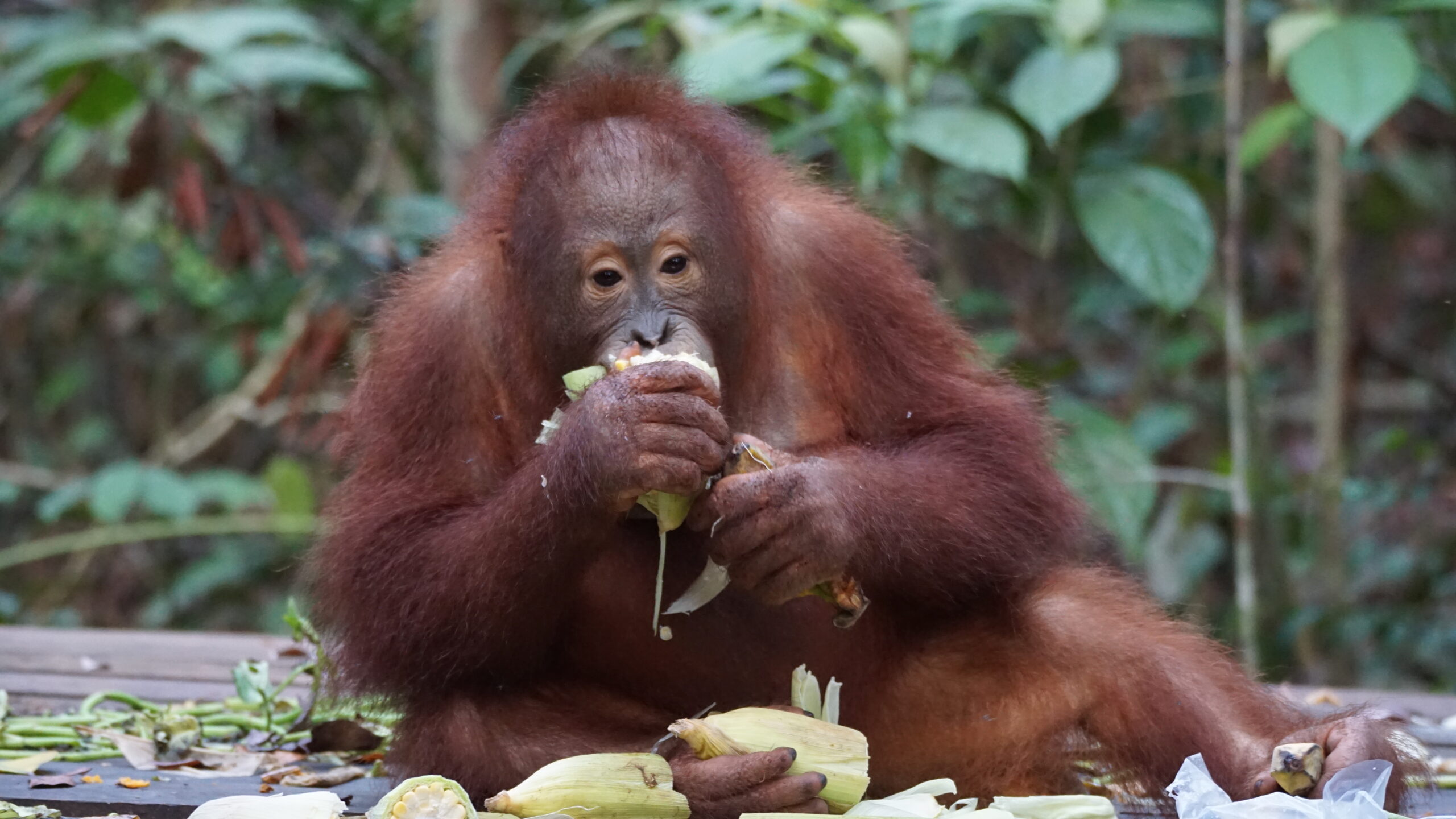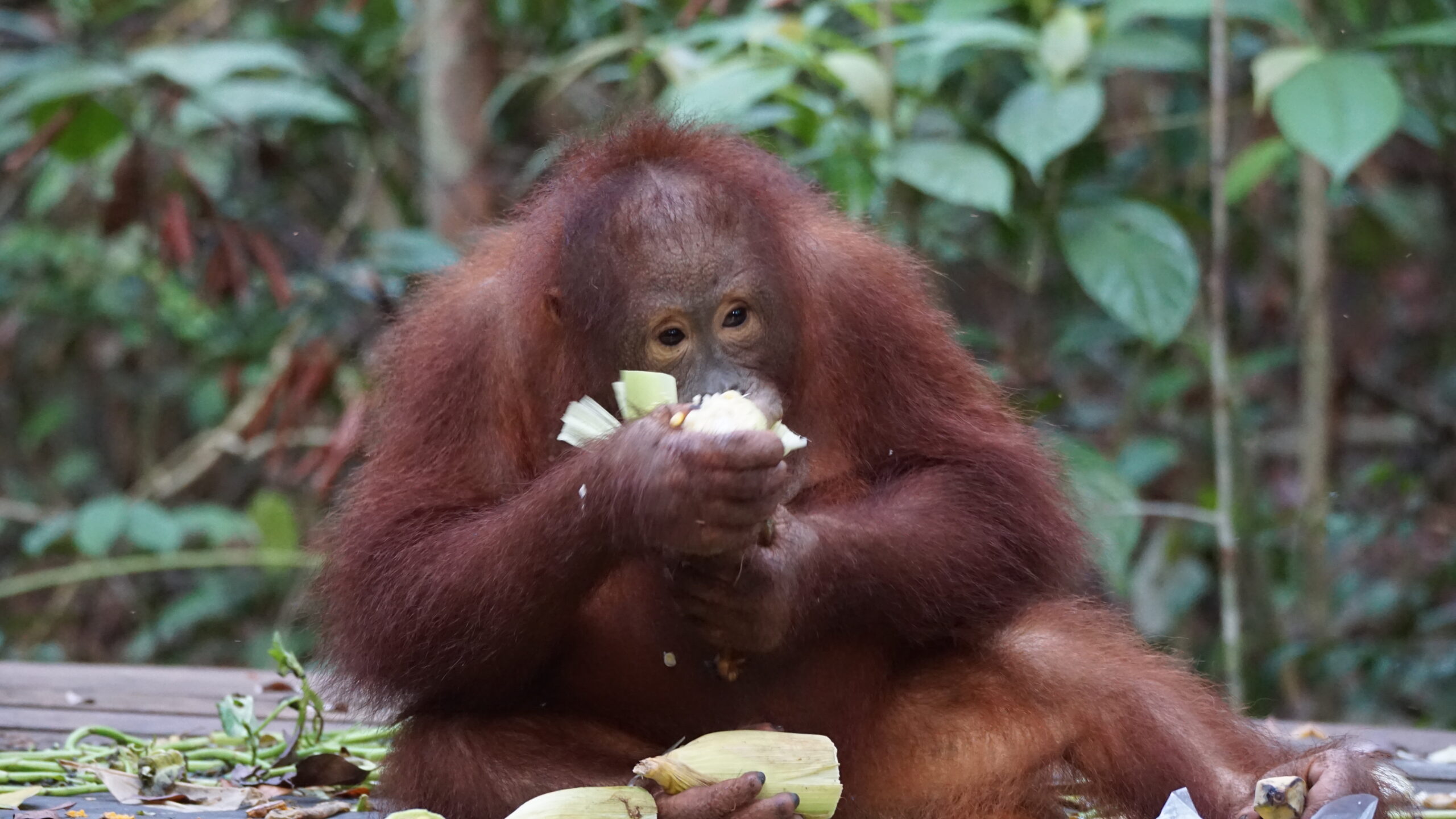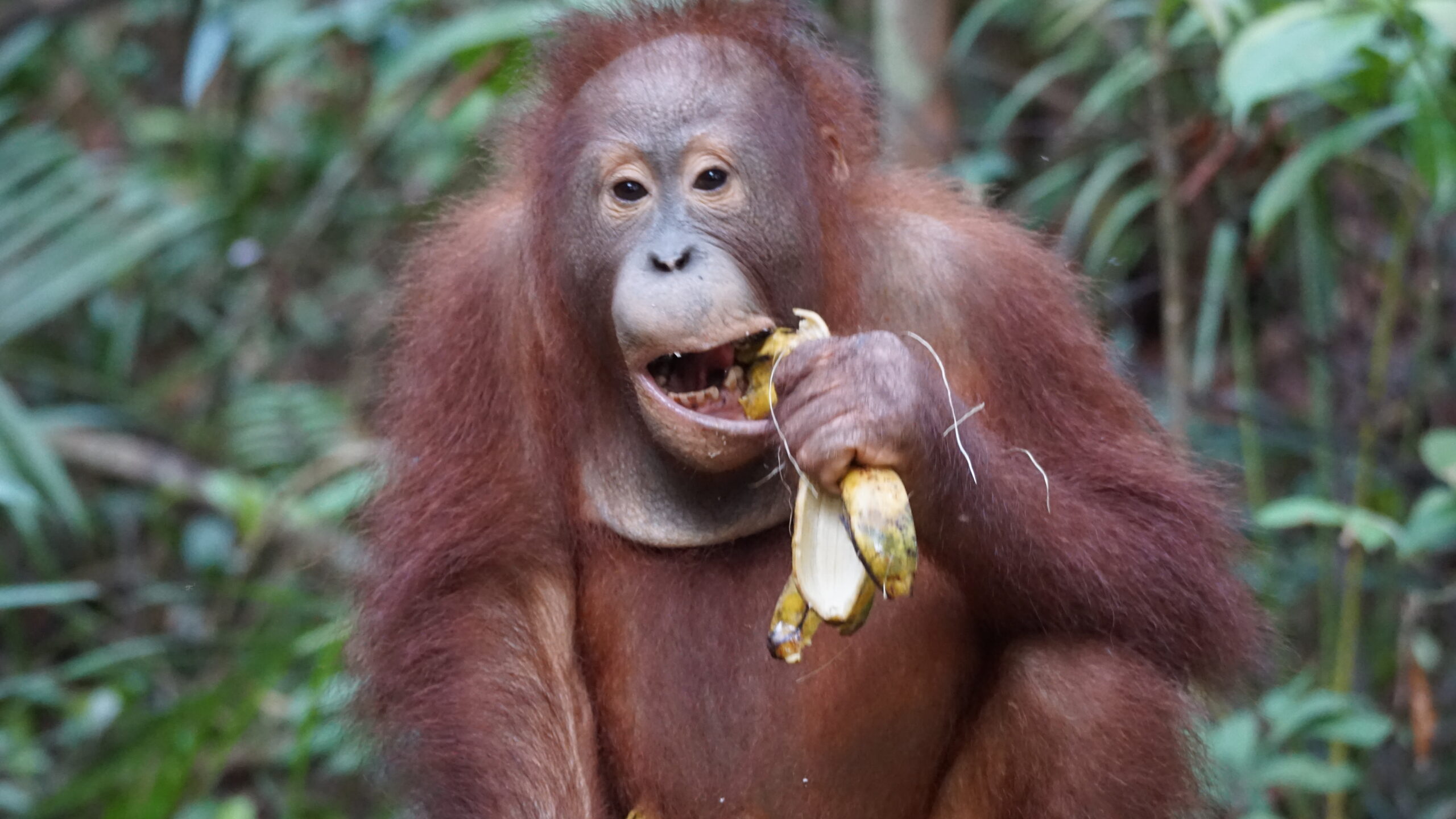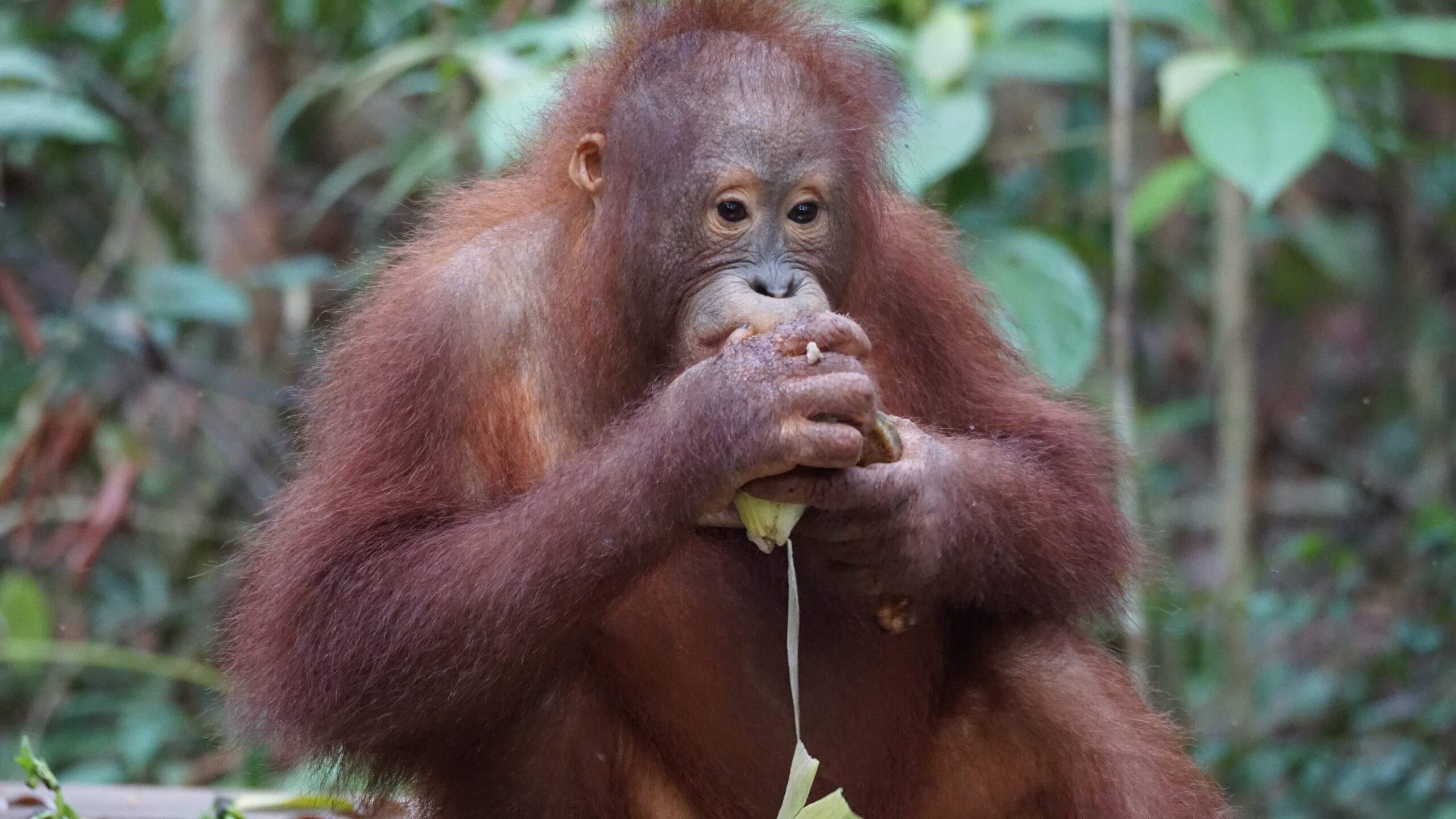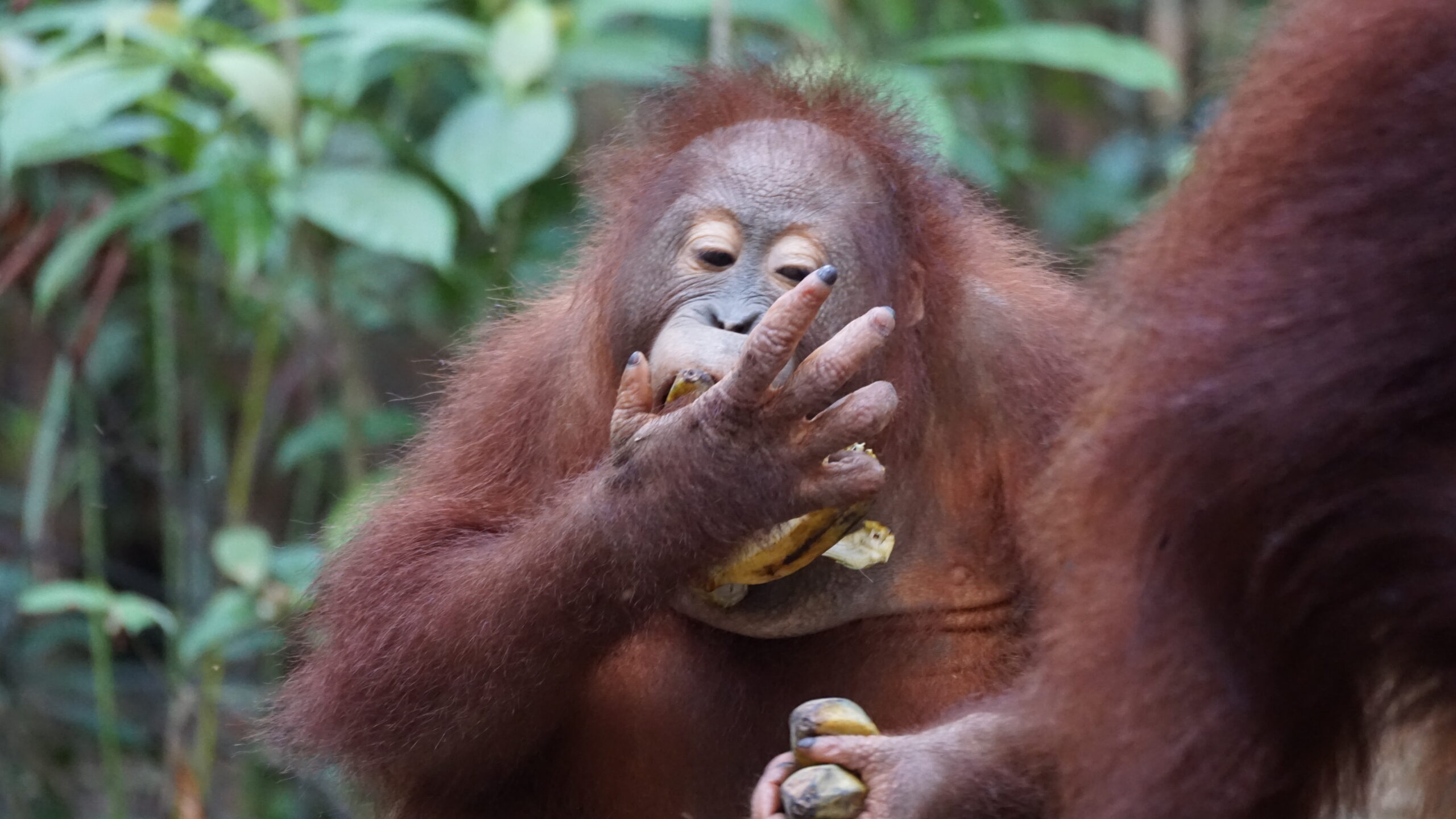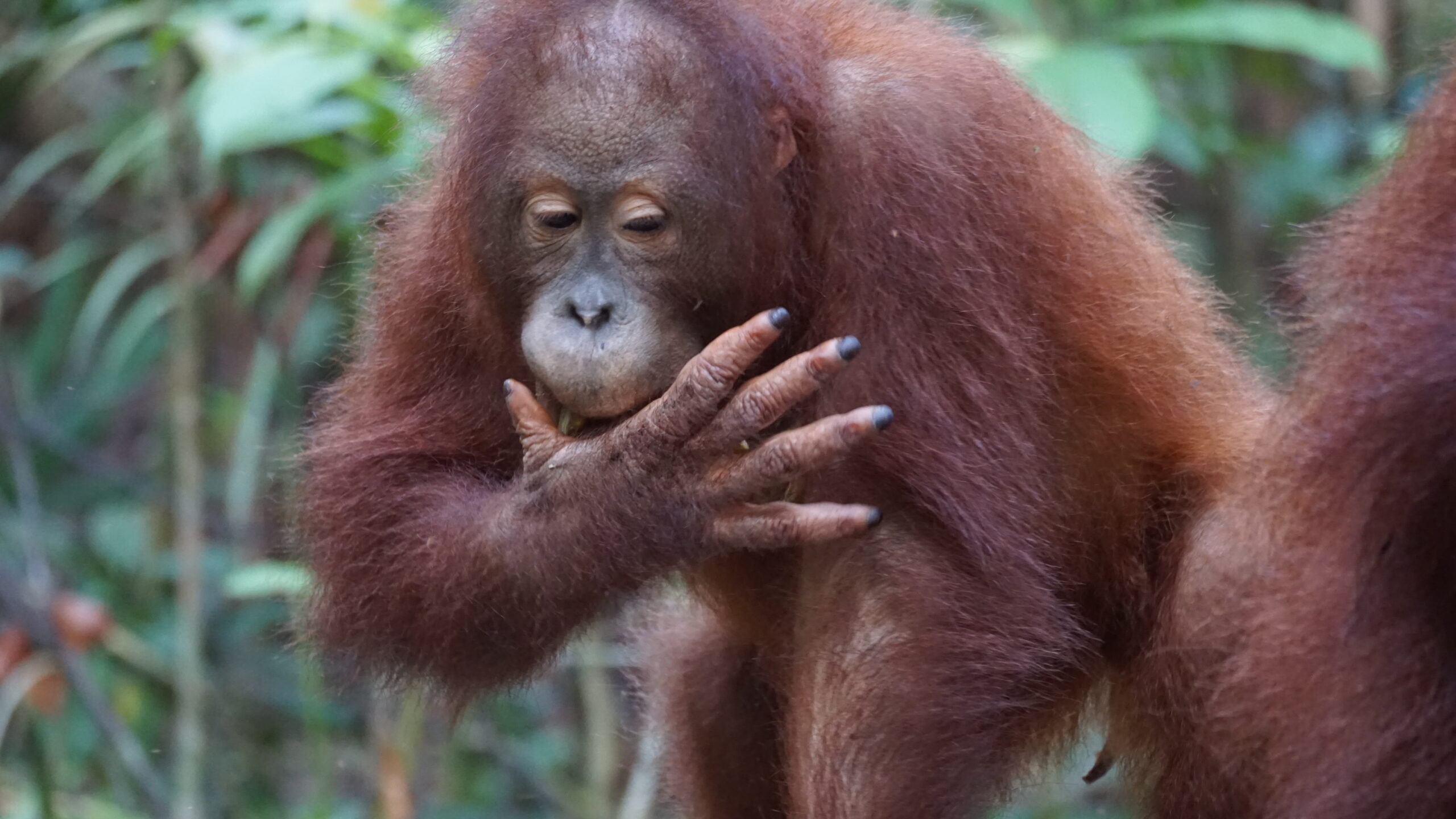
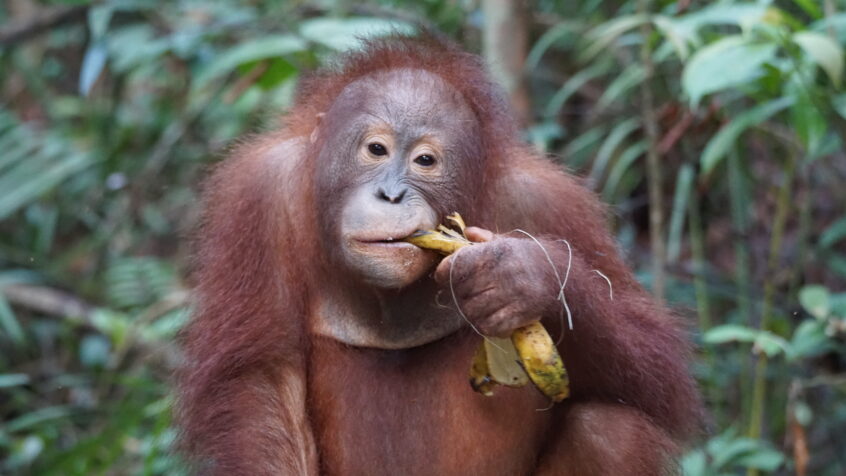
If there was one thing that stood out about Redi during October, it was his energy at Forest School. He always seemed to find something to do, whether swinging repeatedly from his favorite tree or exploring the surrounding area in search of food. From late morning into the afternoon, a tree near the Forest School enclosure fence became one of his new regular spots. Its flexible branches gave him plenty of opportunities to swing while occasionally chewing on young leaves and keeping an eye on what his groupmates were doing nearby.
Despite his many activities in the forest, food remains one of the quickest ways to capture Redi’s attention. During the group’s second Forest School session in October, Redi was hanging from a tree when he noticed Banir eating something on the forest floor. As soon as he spotted her, Redi climbed down and approached. Banir had discovered a relatively large nest of stingless bees, known locally as kelulut. Redi then seized the nest, so that Banir’s opportunity to continue eating was stopped.
During food-related interactions within his group, Redi often displays dominant behavior and can seize food being consumed by another orangutan. The observer initially allowed time to monitor the interaction before deciding to intervene. When the observer began breaking the honey nest into smaller pieces so that Banir, Seko, Otan, and Julia could also have a chance to eat, Redi attempted to retain the nest he had taken over. He tried to push the observer away and made several attempts to carry the nest off by rolling it away.
Intervention of this kind is not automatic whenever competition over food occurs. Observers first monitor the situation and each individual’s response, stepping in when intervention is considered necessary to manage access to the food. In this case, dividing the honey nest allowed the other group members to explore the food source discovered in the forest. It also gave them an opportunity to encounter and try natural food.
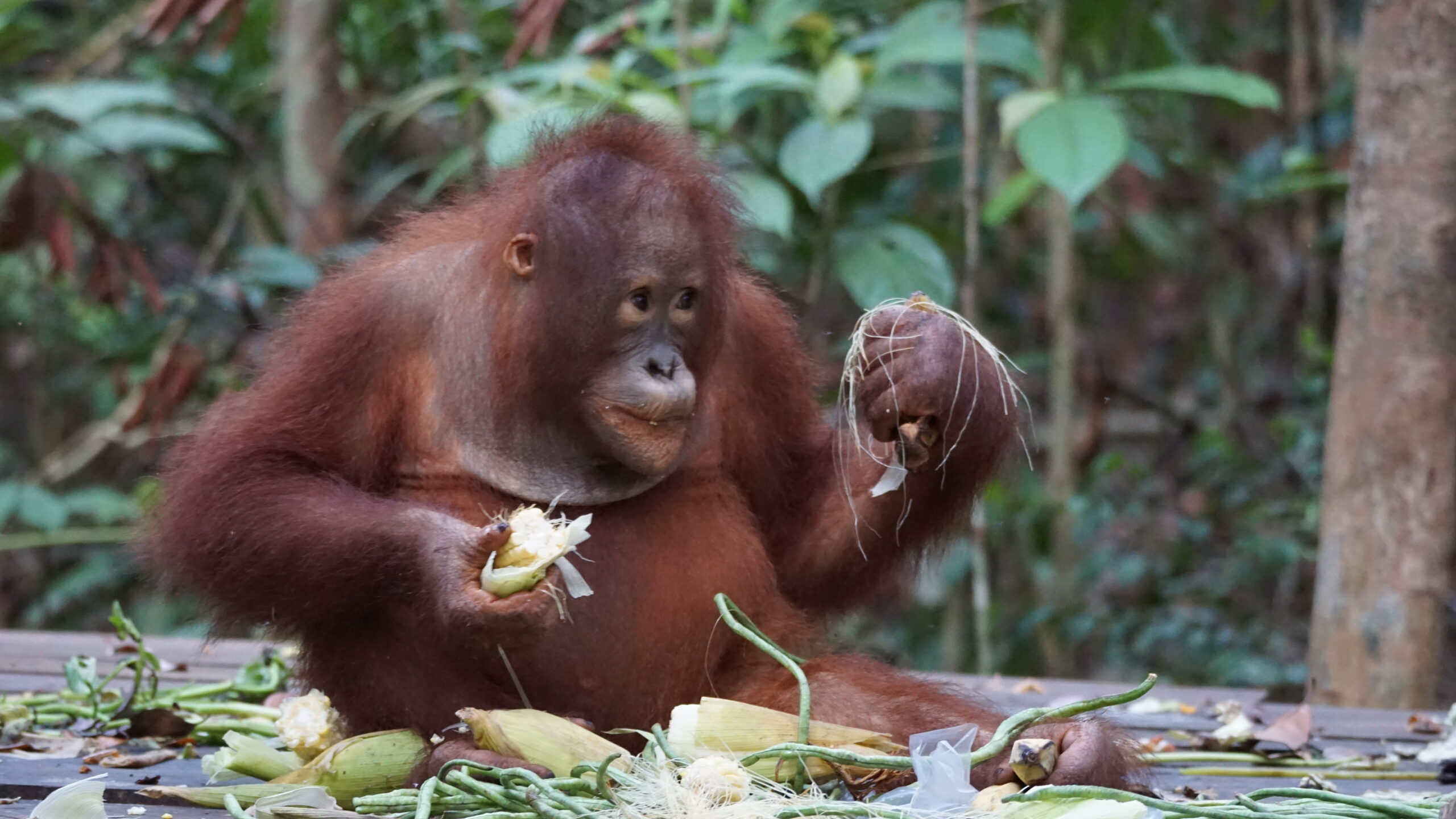
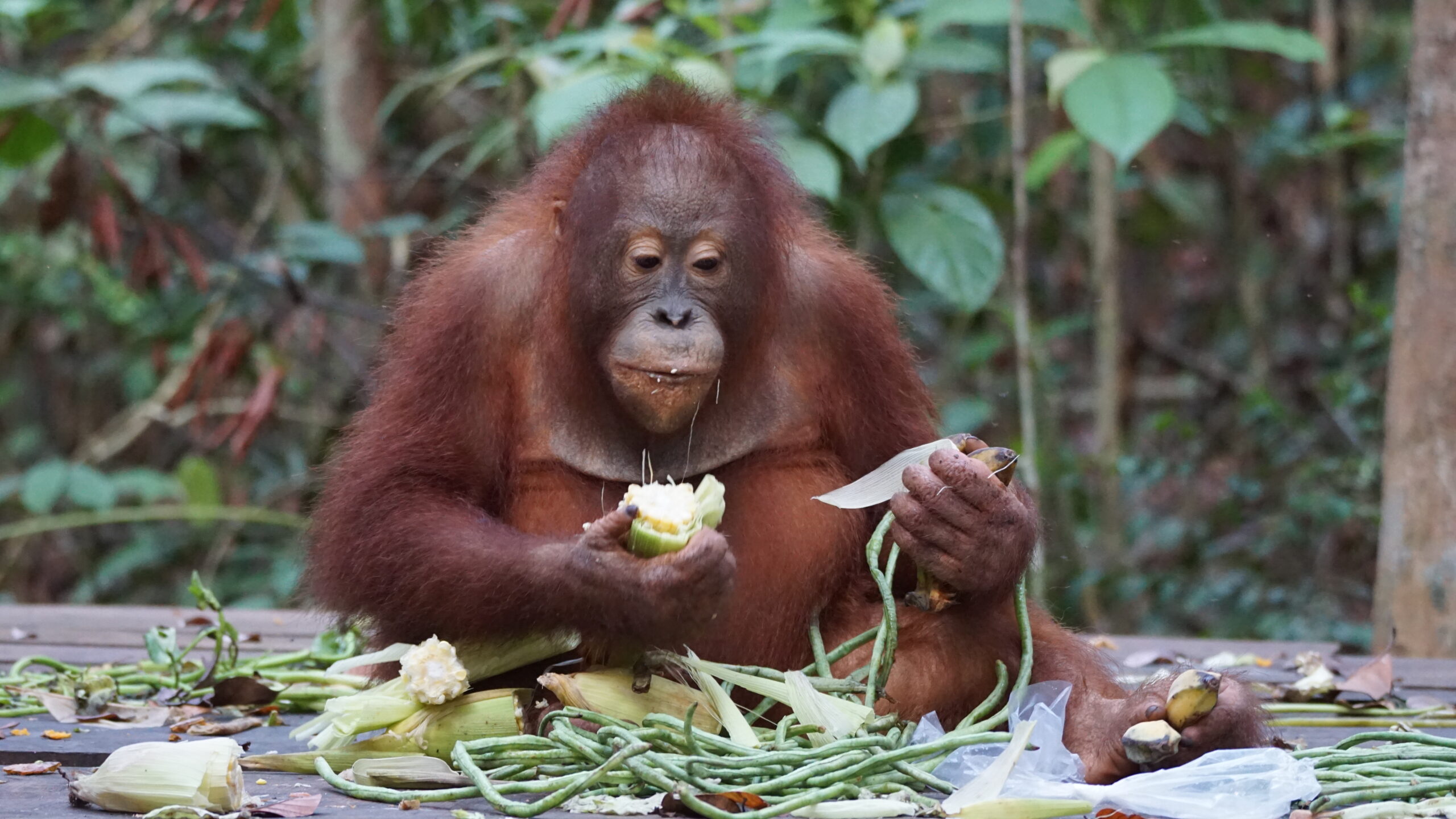
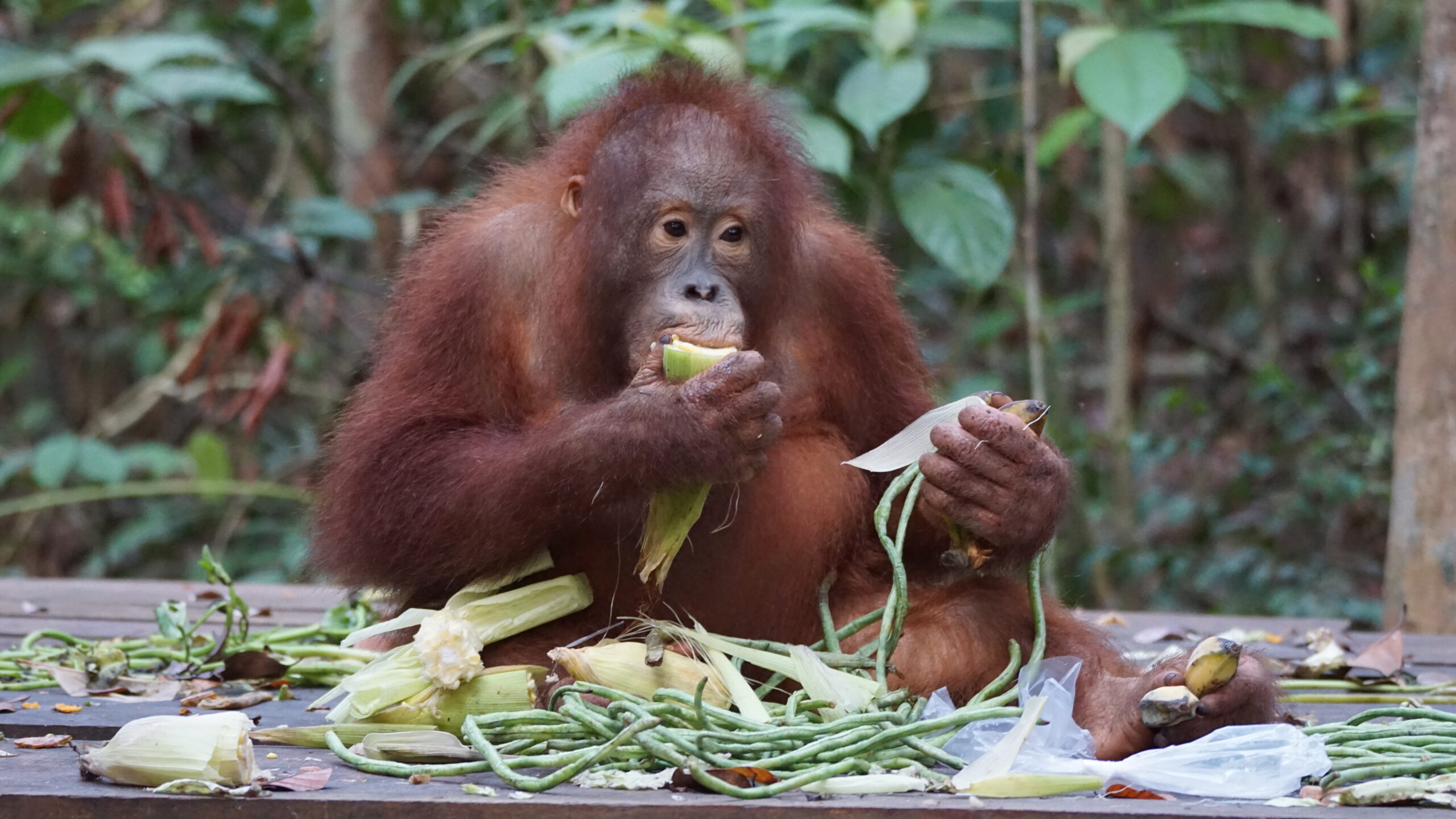
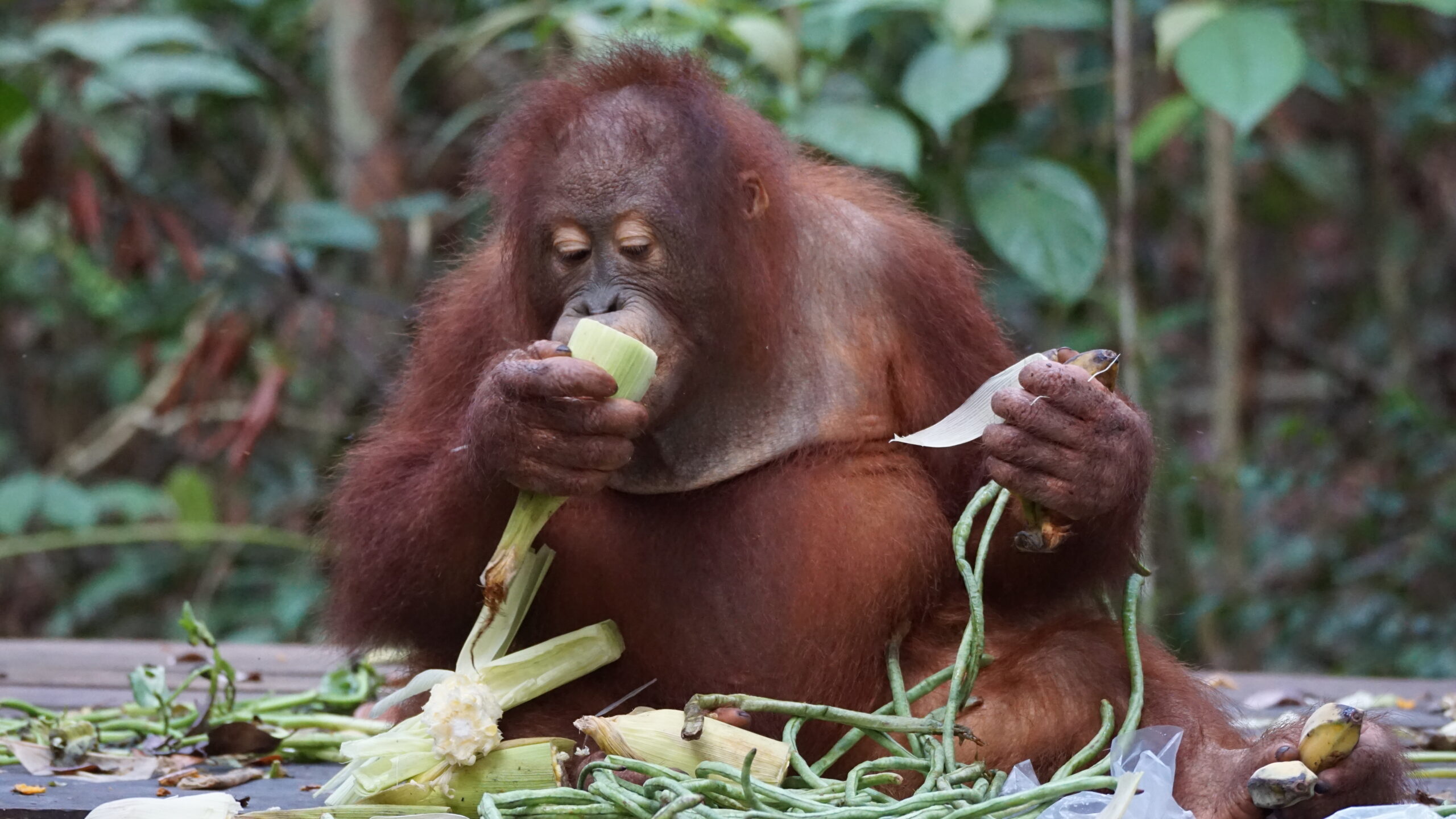
Redi’s enthusiasm for food was also evident during scheduled afternoon feeding at Forest School. Although he has a strong appetite and rarely refuses the food provided, he still shows clear preferences when presented with different foods at the same time. When pumpkin and pineapple were offered together, he chose to eat the pineapple first. With both his hands and feet occupied holding and managing the food, Redi finished the pineapple before moving on to the pumpkin. This shows that, despite his broad interest in food, the types of food available still influence the order in which he chooses to eat them.
Redi’s response to Brooklyn has also differed depending on the setting. When Brooklyn was first moved into the neighboring overnight enclosure, Redi showed curiosity and made several attempts to interact with him. However, during Forest School, when Redi had access to the tunnel connected to Brooklyn’s overnight enclosure, he did not show the same interest, even when Brooklyn was inside. In the forest, Redi generally remained occupied with his own activities; climbing, exploring the surrounding area, foraging, and occasionally playing. This contrast offers an interesting observation of how Redi’s responses to another individual can vary depending on the setting and what he is doing at the time.
Throughout October, Redi displayed a range of behaviors that shaped his daily life at Forest School. His favorite tree provided a place to swing and observe the forest, while the discovery of the stingless bee honey showed how quickly a food source could redirect his attention. His food preferences and responses to Brooklyn also illustrate that Redi’s activities involve more than foraging alone; they include how he interacts with his surroundings and other individuals. Together, these observations give the SOC Team a fuller picture of Redi’s habits and behavioral patterns during his time in the forest.