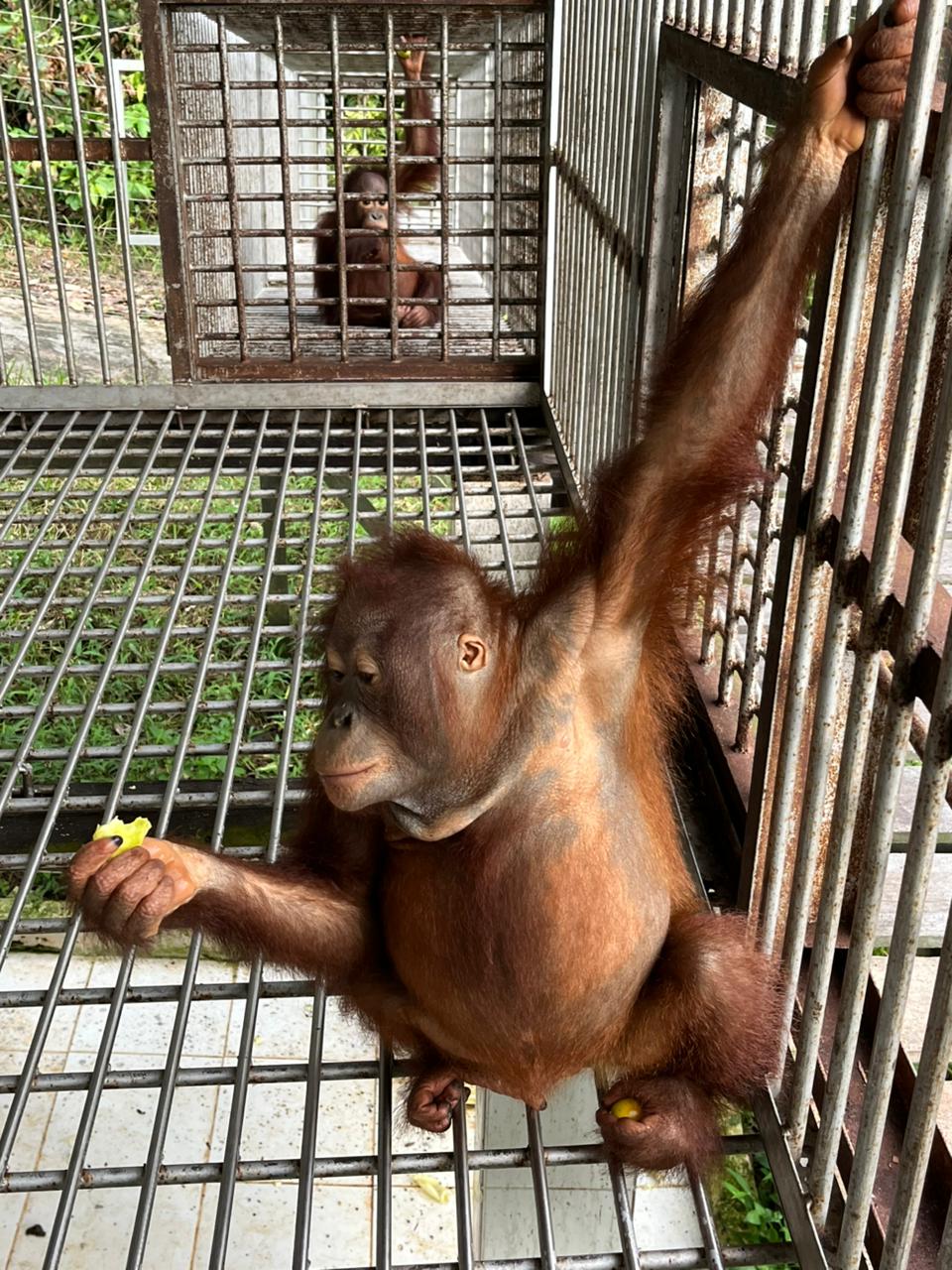
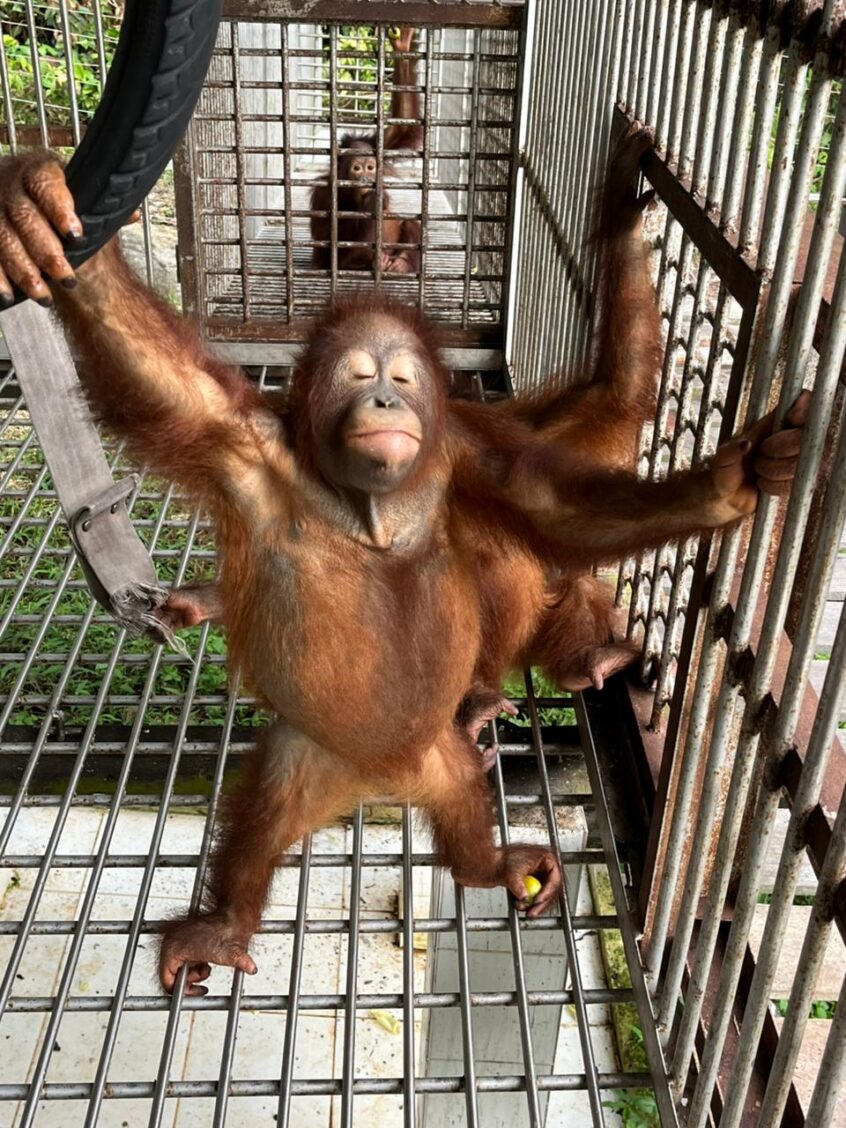
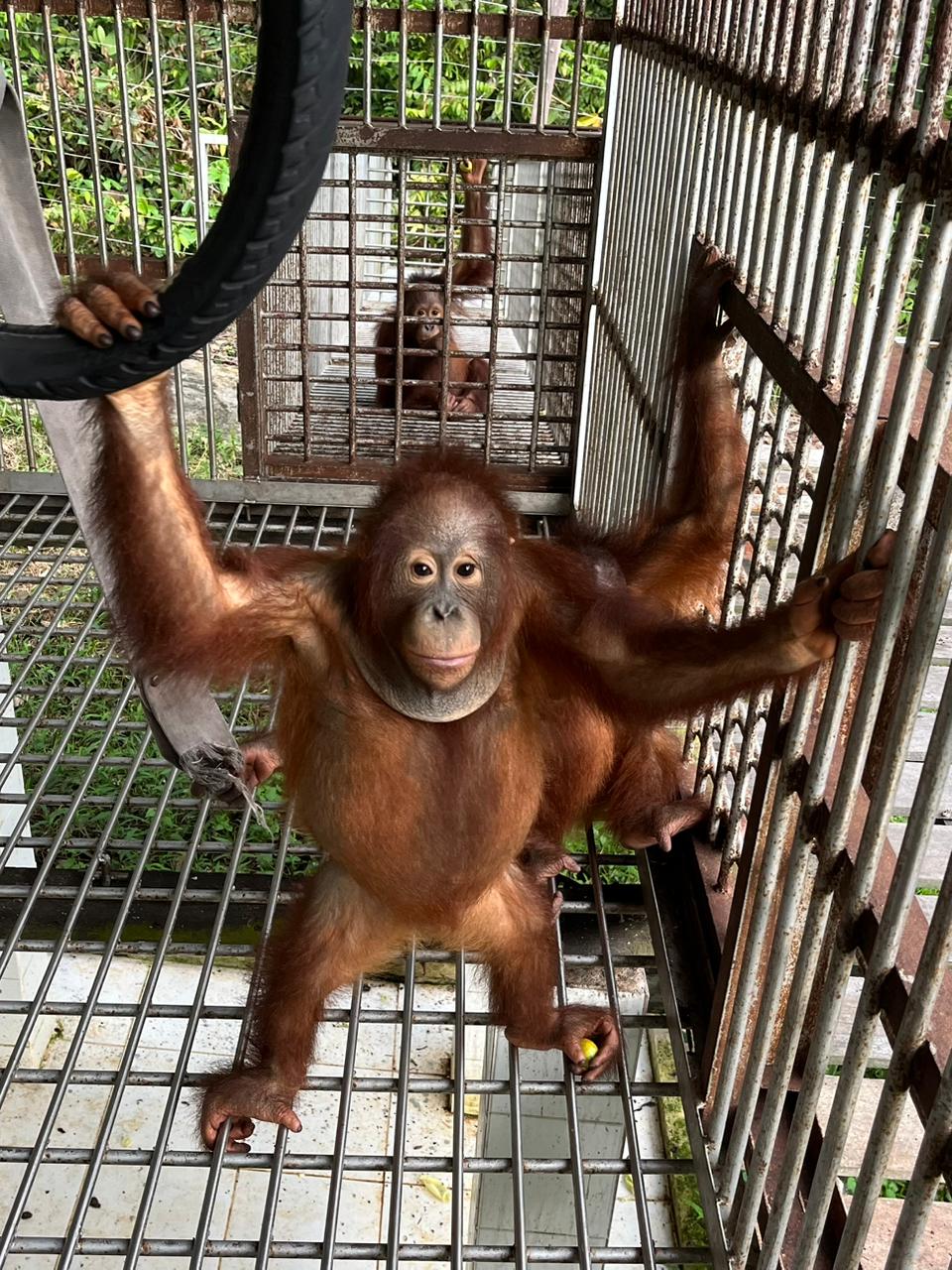
Redi never does anything halfway when it comes to food. His round, prominent belly has become his signature—anyone who sees him can immediately say, “that’s definitely Redi.” Even if someone can’t yet tell Redi apart from Otan and Seko, the two other orangutans in his group, Redi’s body shape alone is already a clear identifier. He isn’t picky; every type of food is his favourite, and if he could, Redi would probably chew from morning until night.
Within his small group, Redi displays dominant behavior, especially during feeding time. He often guards the feeding area like a territorial watchman, making Otan hesitant to approach. Meanwhile, Seko has to be placed in the cage corridor during meals to ensure he gets his own portion—preventing competition that Redi and Otan almost always win. This situation also reflects the group’s social dynamics, where food competition becomes an important indicator for understanding each individual’s behavior.
But Redi isn’t all about eating. He also shows intriguing, problem-solving behavior that highlights his intelligence. When the hammock inside the cage once came loose, he was seen several times tugging on its edges and trying to hook it back onto the metal frame, as if he were repairing his own bed. This type of behavior is common in orangutans—animals known for their problem-solving abilities and tendency to fiddle with objects around them.
Jerora’s frequently cloudy and rainy weather doesn’t seem to affect Redi’s daily activities either. Even under gray skies, he stays active, agile, and in good physical condition. The consistency of his behavior and activity across different weather conditions shows his strong adaptability as an inhabitant of tropical rainforests—an environment that is naturally wet, humid, and unpredictable.
Redi—through his strong food-related dominance, his clever object-manipulating behavior, and the unique personality he displays day after day—reminds us just how complex orangutan behavior can be. They are not just large, solitary animals, but individuals with distinct personalities and behavioral needs. Through close observation like this, we gain a deeper understanding of what they require—from spatial arrangements and enrichment patterns to social management—so that their care and rehabilitation can be carried out more effectively and appropriately.